
This post may contain affiliate links via Amazon's affiliate advertising program. See privacy policy
These reverse seared pork chops deliver everything I want in a pork chop dinner. The interior stays incredibly juicy while the final cast iron sear creates a deeply caramelized crust with crunchy edges that crackle with flavor. Finished with a silky Dijon herb pan sauce, this recipe turns a humble pork chop into a restaurant worthy meal.
Reverse sear method is the easiest way to cook steak and pork chops consistently. Checkout this reverse seared steak recipe for a beef example. For other recipes checkout this collection of pork chop recipes. For crispy juicy pork chops try this deep fried pork chop dish.
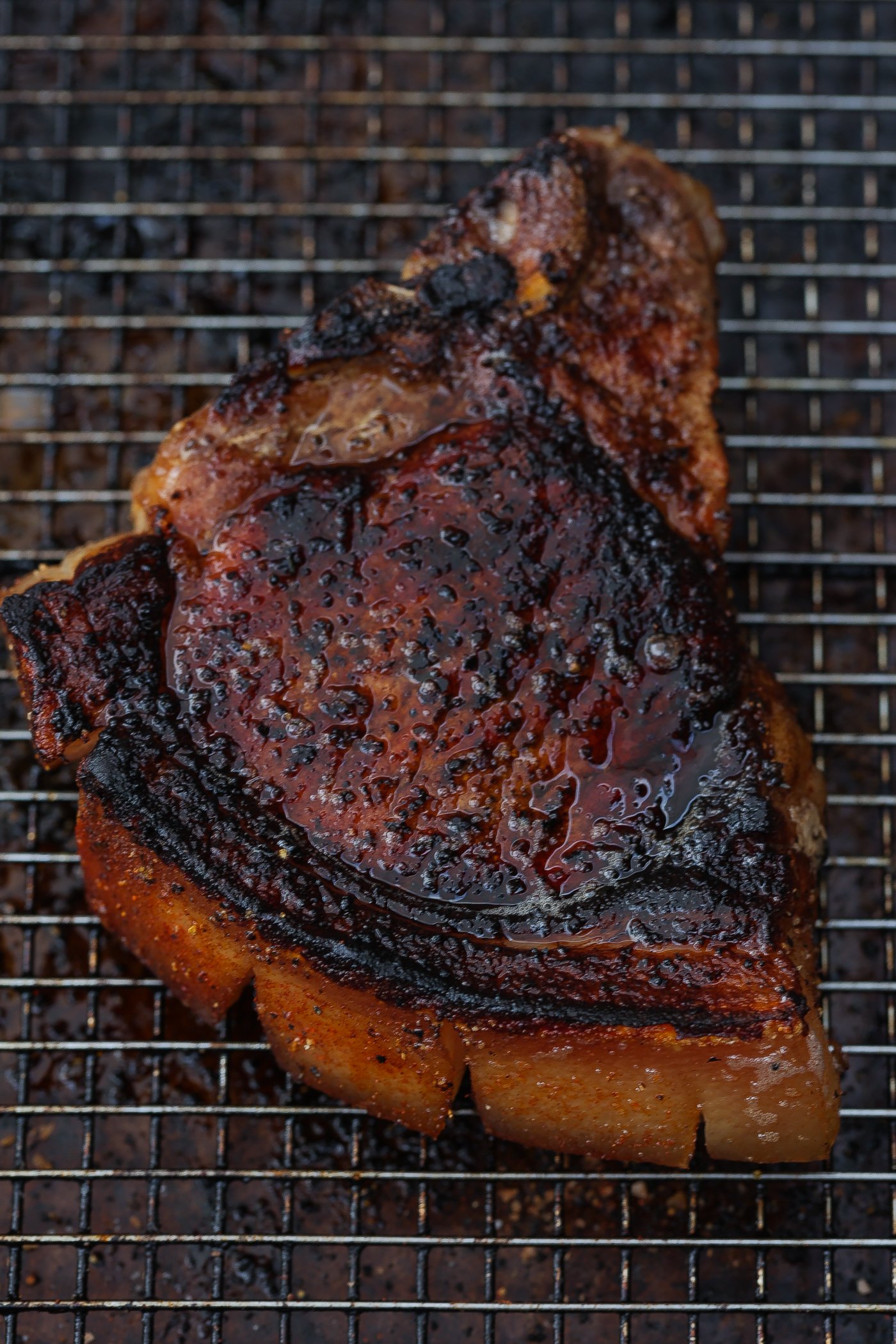
Why You'll Love This Recipe
- Foolproof method for juicy pork chops every time.
- Crispy caramelized exterior with crunchy edges.
- Rich Dijon mustard pan sauce packed with fresh herbs.
- Perfect for thick cut bone in pork chops.
- Great balance of comfort food tradition and modern cooking technique.
- Easy enough for weeknight dinners yet elegant enough for entertaining.
Ingredient Notes For The Pan Sauce
Chicken stock forms the backbone of the sauce, adding savory depth and body. Homemade stock works best, but a quality store bought version performs well. If using low sodium stock, season to taste at the end.
Dijon adds tangy complexity and helps emulsify the sauce into a silky texture. Whole grain mustard can be substituted for a more rustic finish, but Dijon creates the smoothest consistency.
Apple cider vinegar brightens the richness of the pork and cuts through the sauce beautifully. White wine vinegar works in a pinch, though the subtle fruit notes of apple cider vinegar pair especially well with pork.
Fresh thyme brings earthy and slightly floral notes that complement the pork without overwhelming it. Dried thyme can work, but fresh thyme creates a cleaner and more vibrant flavor.
Sage adds warmth and classic pork friendly flavor. Its woodsy aroma makes the sauce feel both comforting and sophisticated. Fresh rosemary can be substituted, but sage remains my preferred choice.
How To Reverse Sear Pork Chops
Reverse searing pork chops is a cooking method that flips the traditional sear-first approach on its head. Instead of searing the meat first and then finishing it in the oven, you slow-cook the pork chops first and then sear them at the end to create a crust. This technique gives you more even cooking and a juicier interior while still achieving that delicious browned exterior.
Here’s how it works, step by step:
- Slow Roast or Bake First:
- Preheat your oven to a low temperature, around 250–275°F (120–135°C).
- Season the pork chops generously .
- Place them on a wire rack over a baking sheet.
- Cook until they reach an internal temperature about 10–15°F below your target (usually 135–140°F for medium).
- Rest:
- Let the pork chops rest briefly while you heat a pan. This helps the juices redistribute.
- Sear at High Heat:
- Heat a skillet with oil or butter over high heat.
- Sear the pork chops for 1–2 minutes per side until a golden-brown crust forms.
- Optional: Add aromatics like garlic, thyme, or rosemary to the pan with butter while searing for extra flavor. Baste with butter as you go
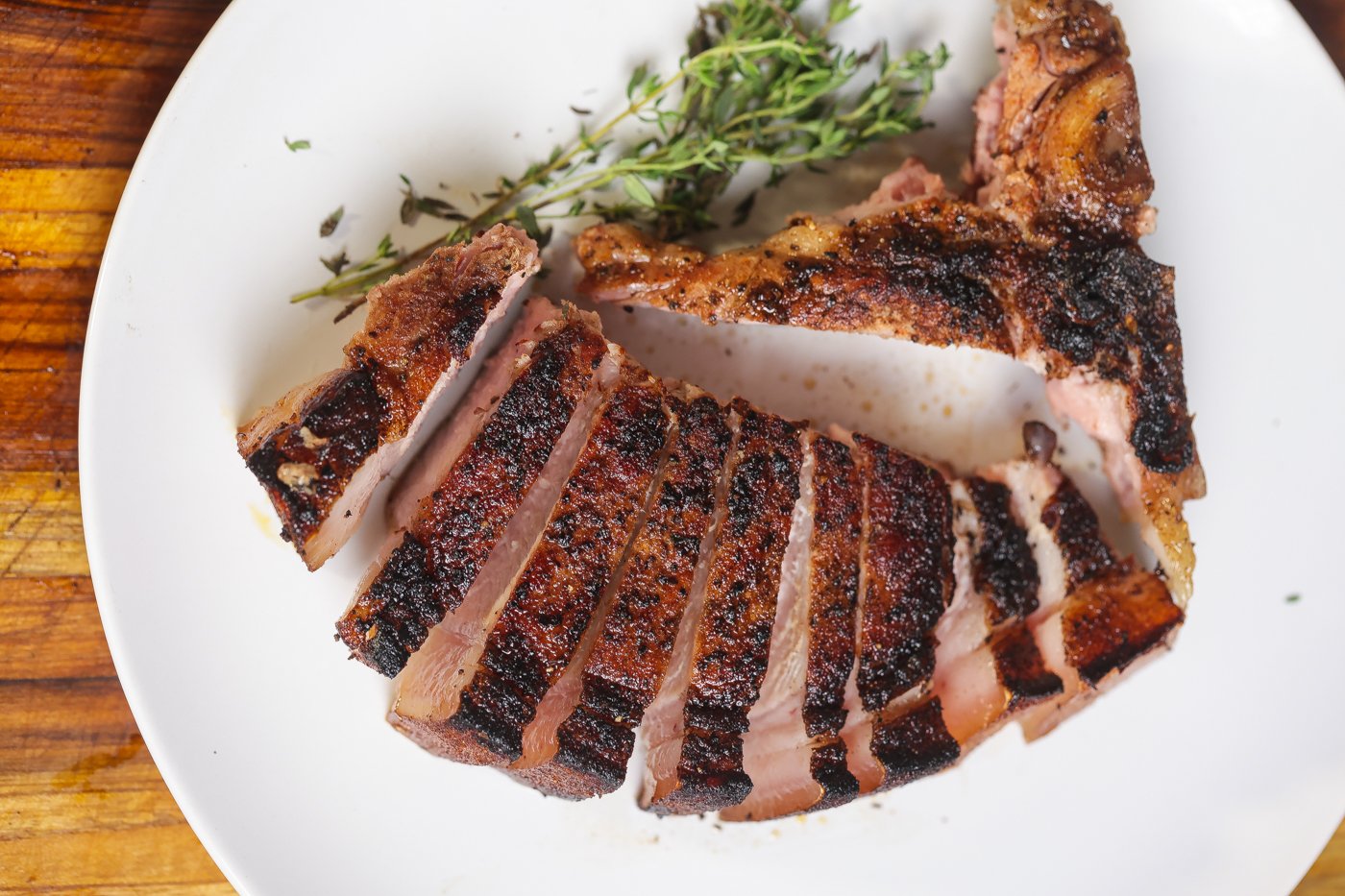
Marwin's Flavor-philes and Liner Notes
Cooking tips to elevate flavor and texture based on tried and true recipe testing
The reverse sear method is a cooking technique that flips the traditional searing process. Instead of searing meat first and finishing it in the oven, you slow-cook the meat at a low temperature (usually in the oven or sous vide) until it’s nearly done, then sear it quickly in a hot pan or on a grill at the end to develop a flavorful, crispy crust.
Why it works:
- Even cooking: Gently bringing the meat up to temperature helps it cook more evenly from edge to center, reducing the risk of overcooked edges and undercooked centers.
- Better crust: Searing at the end, when the meat’s surface is dry, creates a deep, golden-brown crust full of flavor.
- Juicier results: Because the internal temperature is raised slowly, juices stay locked in, and the meat stays moist.
I highly recommend using a brine to prevent drying out especially for thick pork chops. This brown sugar brine not only locks in flavor, but also guarantees juicy pork chops. The sugar helps promote browning through caramelization during searing, giving you that golden, crusty edge with every bite.
For an elevated dish don't skimp on the pan sauce. Make use of all that great flavor left behind in the pan after cooking the rib chops. Top the pork chops liberally or dip pieces in the sauce.
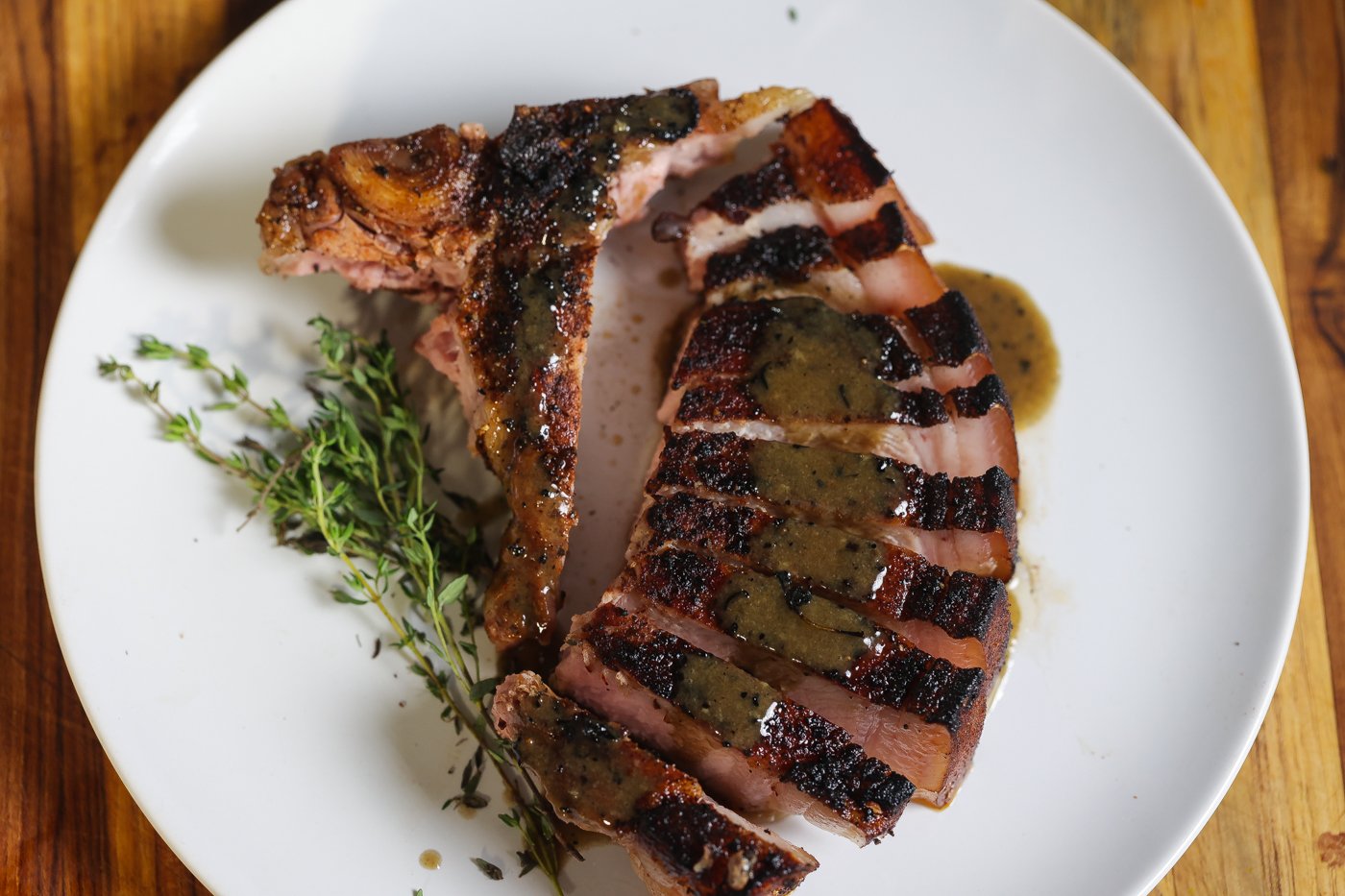
Serving Suggestions
IMO the best pork chops meals include a nice big ole pot of Southern Collard Greens with smoked turkey, remixed version of smothered cabbage, and cheesy baked mac and cheese. For an appetizer include these crispy pan-fried whole okra. I'm not sure there is room for anything else!
Beats and Eats (music to pair with pork chops with pan sauce)
Put on Rare Essence and let "Do You Know What Time It Is" soundtrack your cook. The song is built around the relentless pulse and layered percussion that define classic Washington D.C. go go music. Those rhythms remind me of the two stage process behind reverse seared pork chops. The slow oven cook establishes the foundation much like the groove section holds down the track, while the final screaming hot sear arrives like the horns and call and response vocals bringing energy and excitement. The harmonies and driving pocket mirror the balance between the juicy interior and crunchy crust.
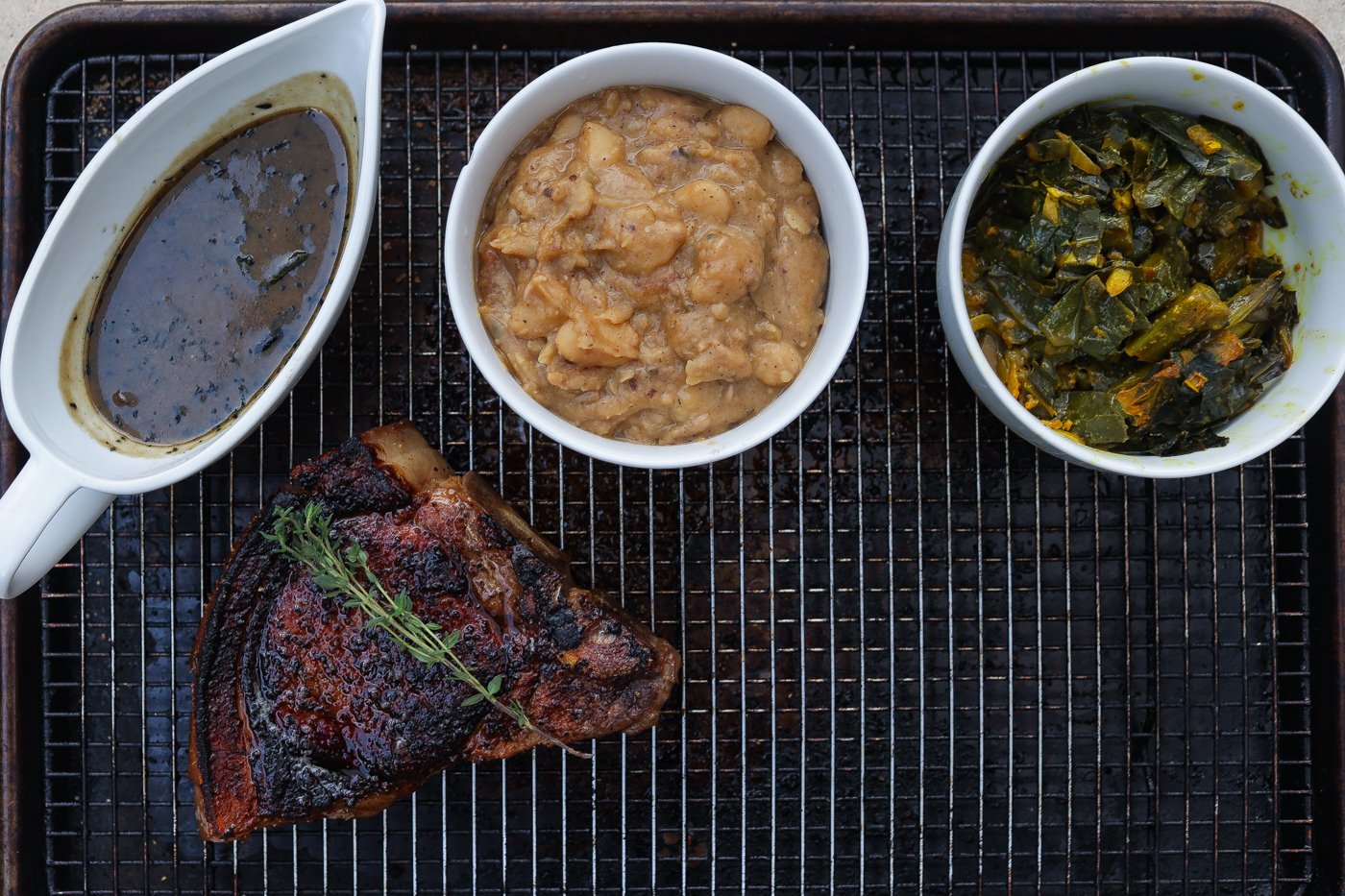
Make This Cast Iron Pork Chop Recipe
If you make this pork chop recipe or any other from the site, please come back and leave me a comment below with your feedback. Definitely take a photo of the dish and be sure to tag #foodfidelity so that I can see them.
You can also keep up with my food exploits as well as original recipes! You can find me on Instagram, Facebook, Twitter, and Pinterest. If you like any of the music you find on the site, visit me at Spotify to find curated monthly playlists.
Lastly, go to my YouTube channel and subscribe to be notified when new weekly videos are uploaded.
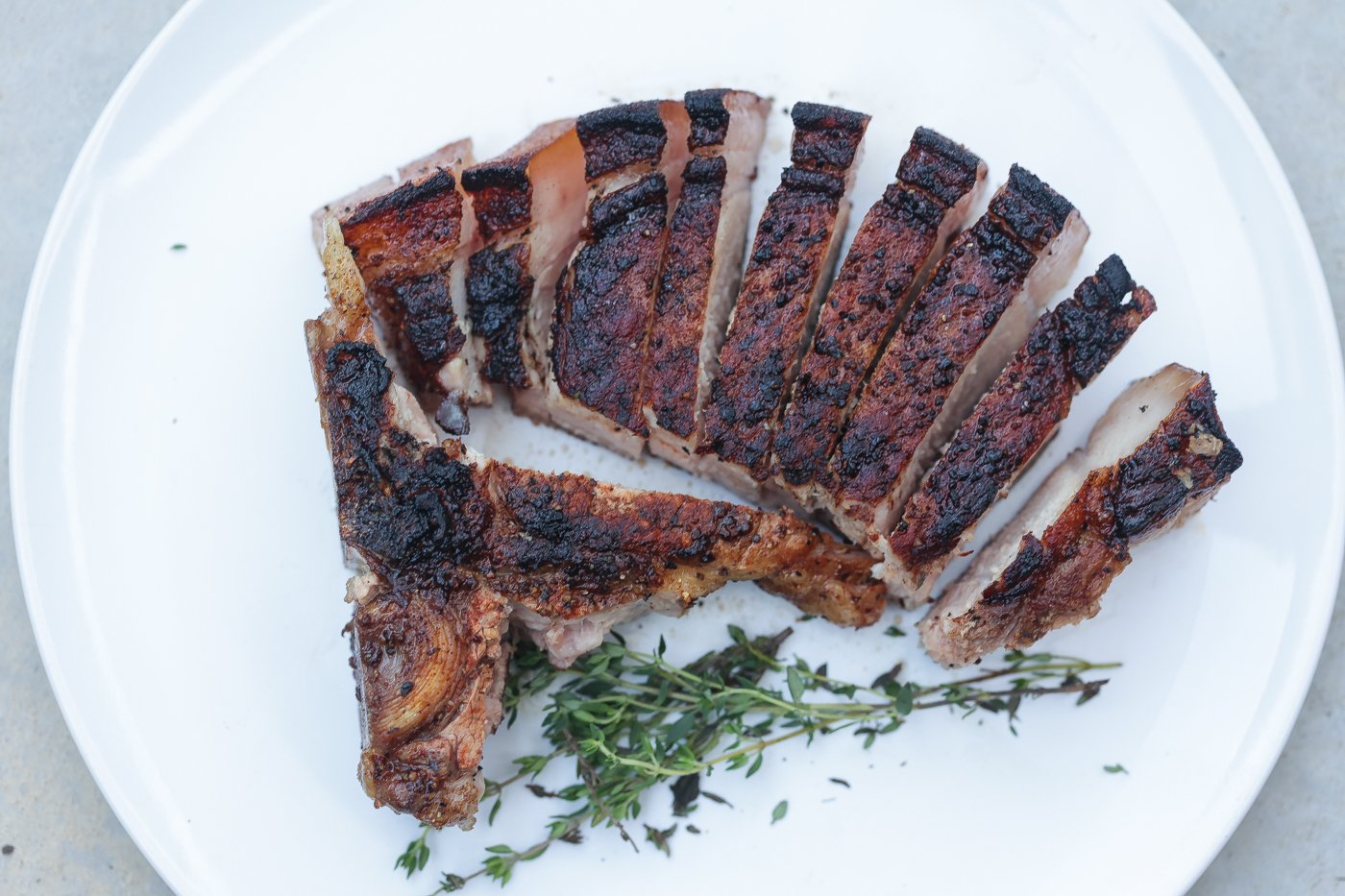
Reverse Seared Pork Chops with Pan Sauce
Ingredients
- 2 10 oz Bone-in Pork Chops
- 1 ½ teaspoons Paprika
- 1 teaspoon Kosher Salt
- 1 teaspoon Black Pepper
- ½ teaspoon Ground Allspice
- 1 tablespoon butter
- 1 clove garlic
- 4 cups Water
- 1 ½ cups Brown Sugar
- 2 tablespoons Kosher Salt
- 6 whole Black Peppercorns
- 6 whole Allspice Berries
- 3 sprigs Fresh Thyme
- 1 ½ cups Chicken Stock
- ¼ cup Apple Cider Vinegar
- ½ cup Dijon Mustard
- 1 sprig Fresh Thyme
- 1 leaf Fresh Sage
Method
- Place all the brine ingredients in a large mixing bowl and mix until sugar and salt fully dissolve. Place the pork chops in a large sealable ziplock bag or container with a lid. Add the brine and refrigerate overnight.
- Remove the chops from the refrigerator, remove from the brine and allow to reach room temperature. Pat chops dry with a paper towel. Mix all the spices together in a small bowl or ramekin. Season the pork chops liberally with seasoning mix.
- Place the seasoned pork chops on a wire rack-lined baking sheet. Bake at 250 degrees F for 30 minutes. Remove pork chops from the oven and prepare to sear them in cast iron skillet.
- Heat skillet on high heat. Add a high smoke point oil like avocado oil or ghee (clarified butter).
- Sear the chops for 1-2 minutes (depending on thickness) per side in a cast iron pan. Sear the fat cap for 30 seconds holding the chops upright with a set of tongs.
- Level up by adding butter and garlic clove to the pan during searing. Baste the pork chops with the butter
- Remove the pork chops from the pan and allow to rest while you make the sauce. Add the chicken stock and allow to cook on medium high heat for 2-3 minutes.
- Add the cider vinegar, mix in well, and deglaze the pan by scraping up all the brown bits. Add the thyme, sage, and mustard. Stir well then reduce to thicker consistency.
Nutrition
Notes
-
Tips for Maximizing Flavor
- Choose Quality Pork: Opt for high-quality, well-marbled pork chops. The marbling contributes to juiciness and enhances the flavor during cooking.
-
- Brining: Consider brining the pork chops before cooking. Brining involves soaking the pork in a mixture of water, salt, sugar, and sometimes spices, enhancing flavor and moisture retention.
-
- Season Well: Season the pork chops generously with a blend of spices, herbs, salt, and pepper. Common choices include garlic, thyme, rosemary, paprika, or a pre-made pork seasoning mix.
-
- Allow Time to Rest: Allow the seasoned or marinated pork chops to rest at room temperature for about 30 minutes before cooking. This helps them cook more evenly and enhances flavor.
-
- Sear for Flavor: Sear the pork chops in a hot skillet or pan with a bit of oil to develop a flavorful crust on the outside. Searing locks in juices and adds a caramelized flavor.
-
- Use Herbs and Aromatics: Cook the pork chops with fresh herbs (e.g., thyme, rosemary) and aromatics (e.g., garlic, shallots) to infuse additional flavors.
-
- Rest Before Serving: Allow the cooked pork chops to rest for a few minutes before serving. This helps redistribute the juices within the meat, ensuring a juicy and flavorful bite.
-
- Pair with Complementary Flavors: Serve the pork chops with complementary flavors like apple sauce, caramelized onions, or a fruit chutney to enhance the taste
Leave a comment