This post may contain affiliate links via Amazon's affiliate advertising program. See privacy policy
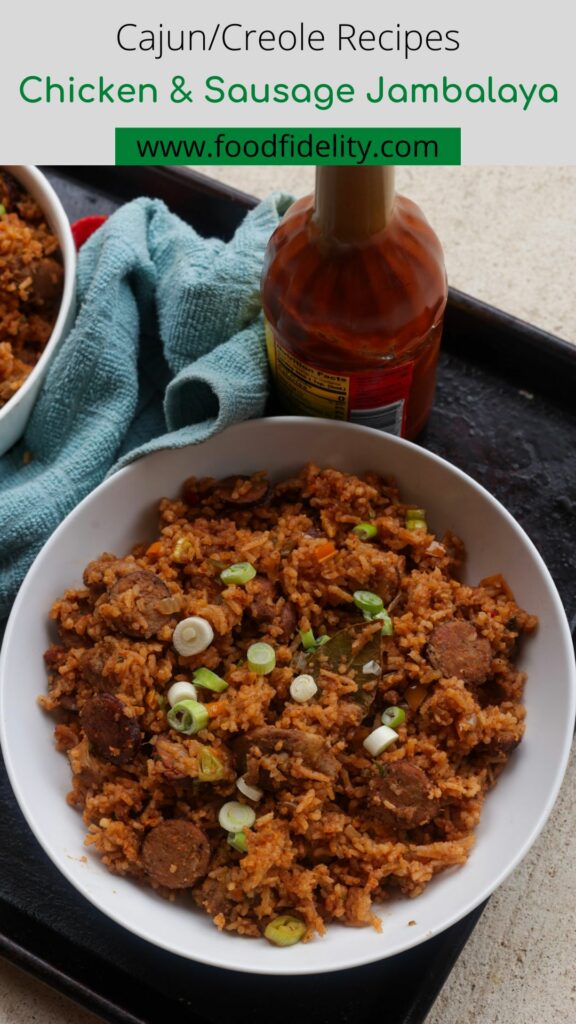
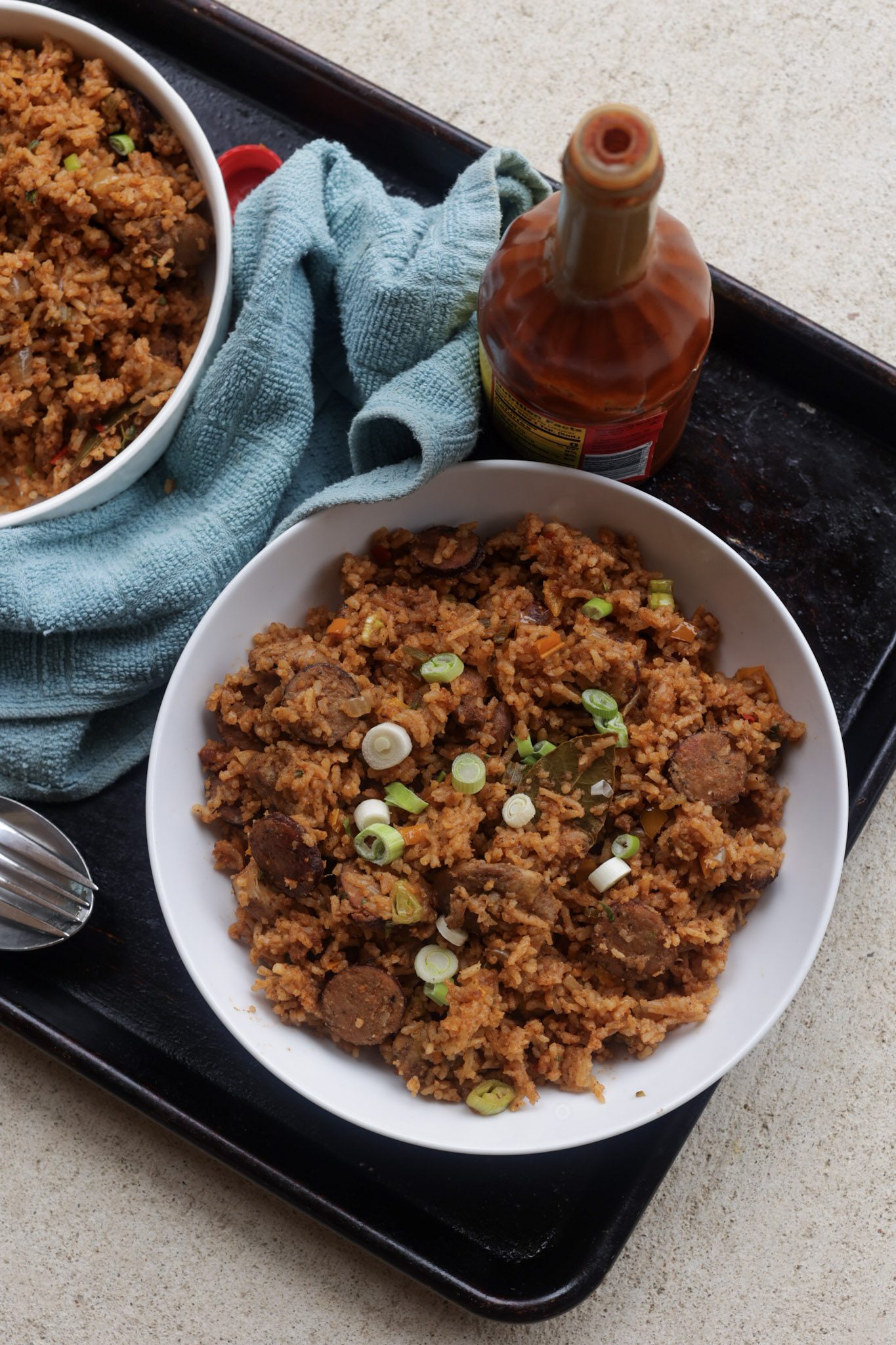
Jambalaya is a Louisiana one-pot rice dish built on the holy trinity (onion, bell pepper, celery), smoky sausage, and chicken simmered in a deeply seasoned broth. It’s perfect for cookouts, family dinners, or anytime you need a crowd-pleasing, flavor-packed meal. This version leans into smoky sausage, well-seasoned chicken, and a controlled simmer that keeps the rice fluffy, not mushy.
For other "red rice" based dishes checkout the mother recipe West African jollof rice or sibling Charleston red rice.
Additionally for other really good creole vibes make this crawfish etouffee dish.
Why This Jambalaya Hits Different
Jambalaya is one of those dishes people think is easy until they actually cook it. I’ve had my share of bland pots and straight-up mushy rice, and what I learned is this: jambalaya isn’t about throwing everything in a pot, it’s about sequencing and control. My approach is rooted in building flavor in layers and respecting the rice as much as the meat. That shift in mindset is what took this from average to dialed-in.
Key Ingredients and Their Roles
- Chicken thighs bring richness and stay forgiving during cooking.
- Andouille sausage is the smoky backbone that defines the dish.
- The holy trinity builds the aromatic base, while garlic adds depth.
- Chicken stock carries flavor into the rice, and Cajun seasoning sets the tone.
- Bay leaves and thyme round things out,
- Hot sauce adds heat and tang, and green onions provide that fresh finish.
My Cooking Method (and Why It Works)
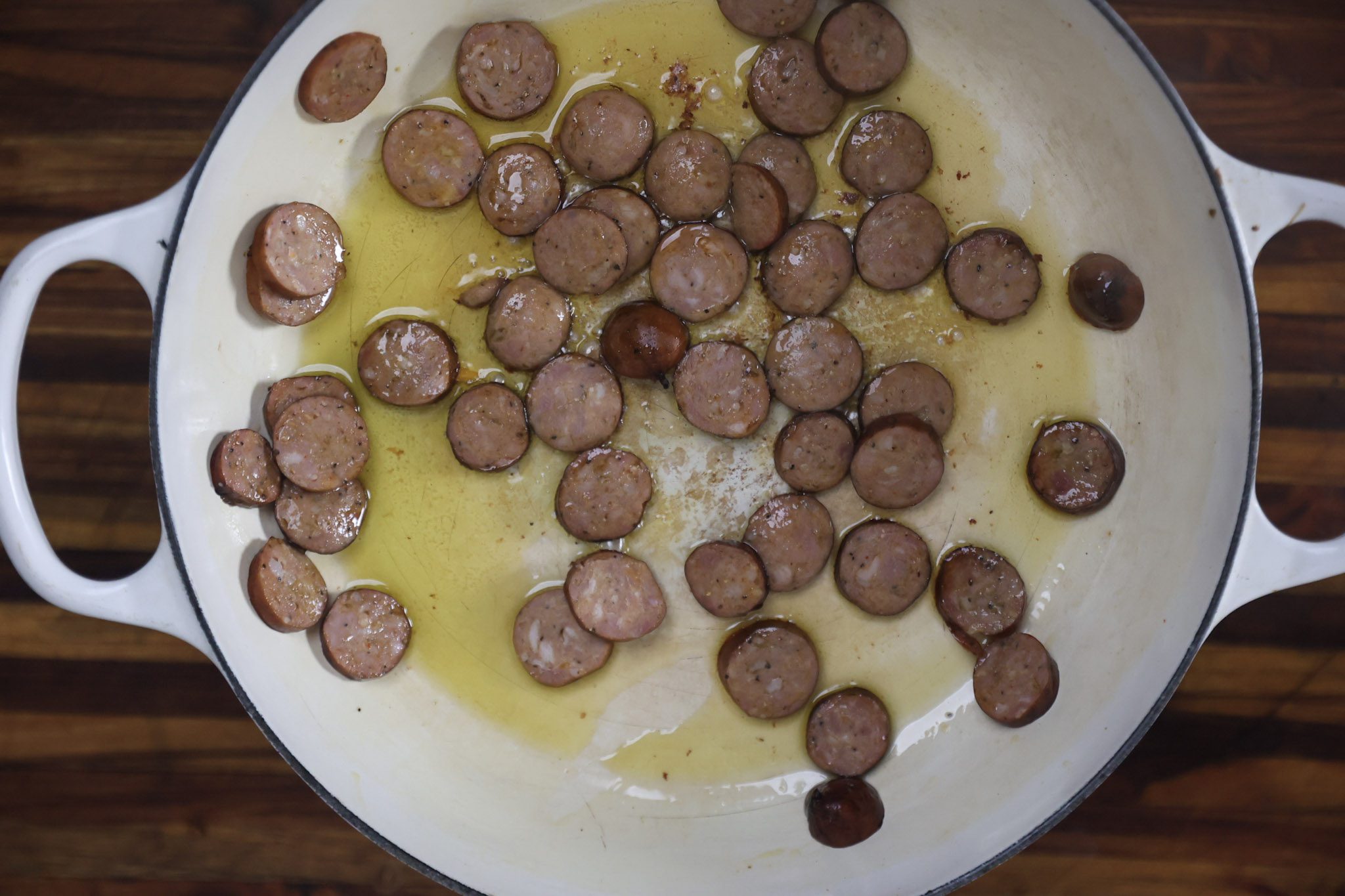
I start by browning the andouille sausage hard. Not just cooking it, but really letting it render and develop that deep color. That fat becomes the foundation for everything else. Early on, I used to rush this step, and the dish always tasted like something was missing. Turns out, that “missing” was flavor left in the pan.
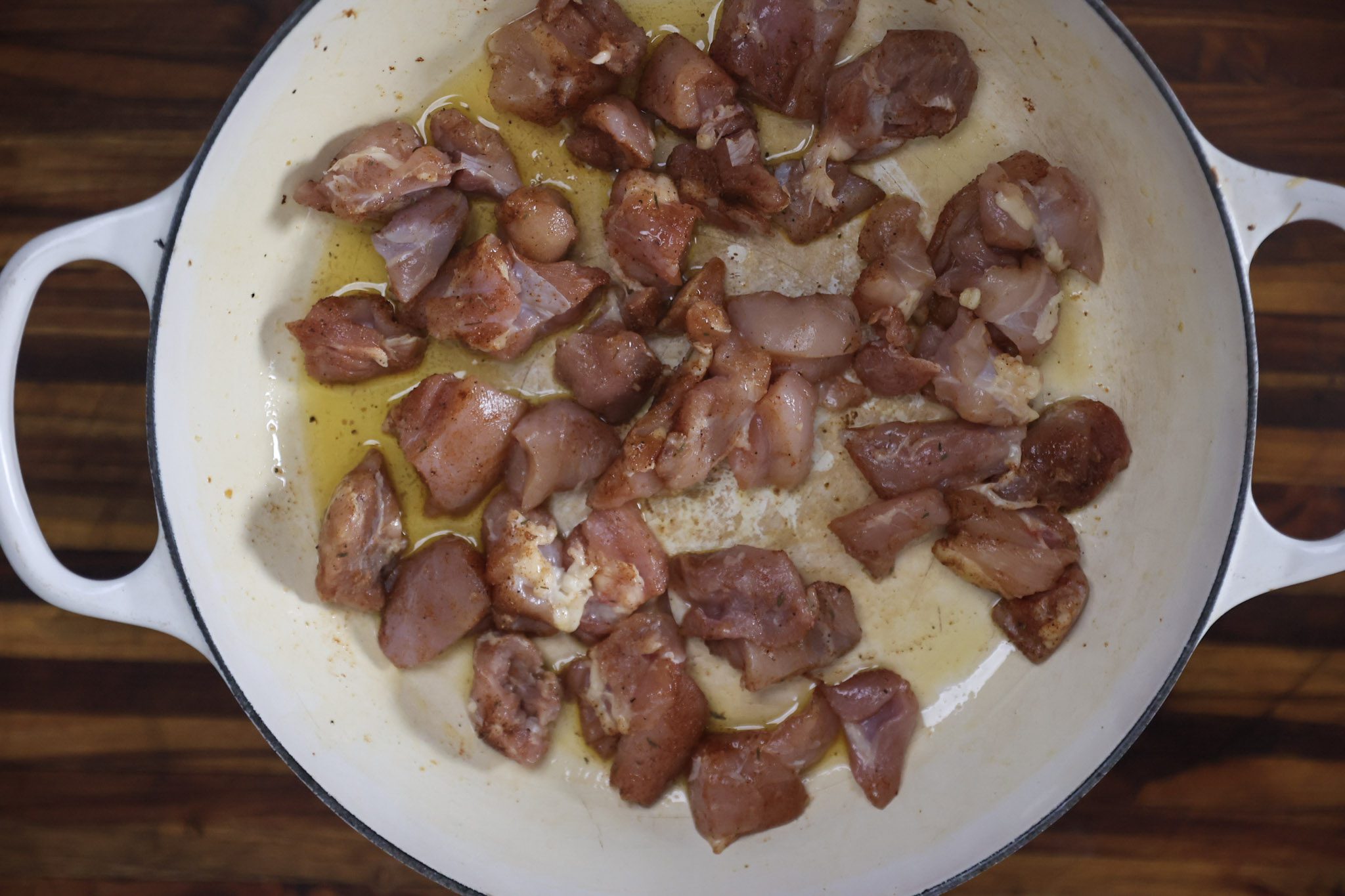
Then comes the chicken. I stick with thighs because they bring more flavor and stay juicy. Cooking them in the same pot builds even more depth, and those browned bits, what chefs call fond, are non-negotiable. That’s free flavor, and I make sure to deglaze and pull every bit of it into the dish.
Building Flavor the Right Way
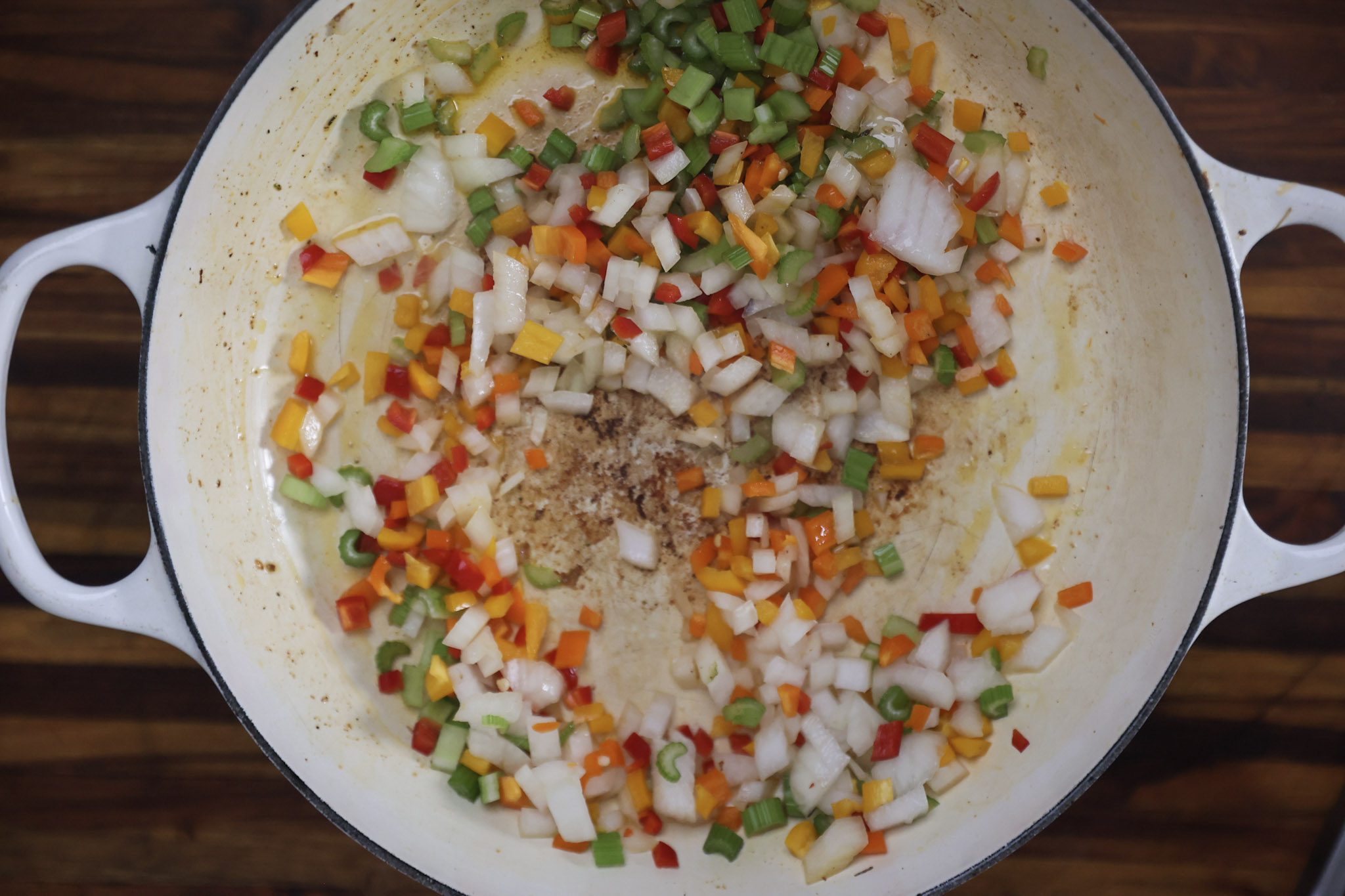
The holy trinity - onion, bell pepper, and celery gets cooked down slowly until soft and fragrant. I don’t rush this step because this is where the base flavor develops. I bloom the spices directly in the fat, which is something I learned the hard way. Tossing spices into liquid dulls them, but blooming them wakes everything up.
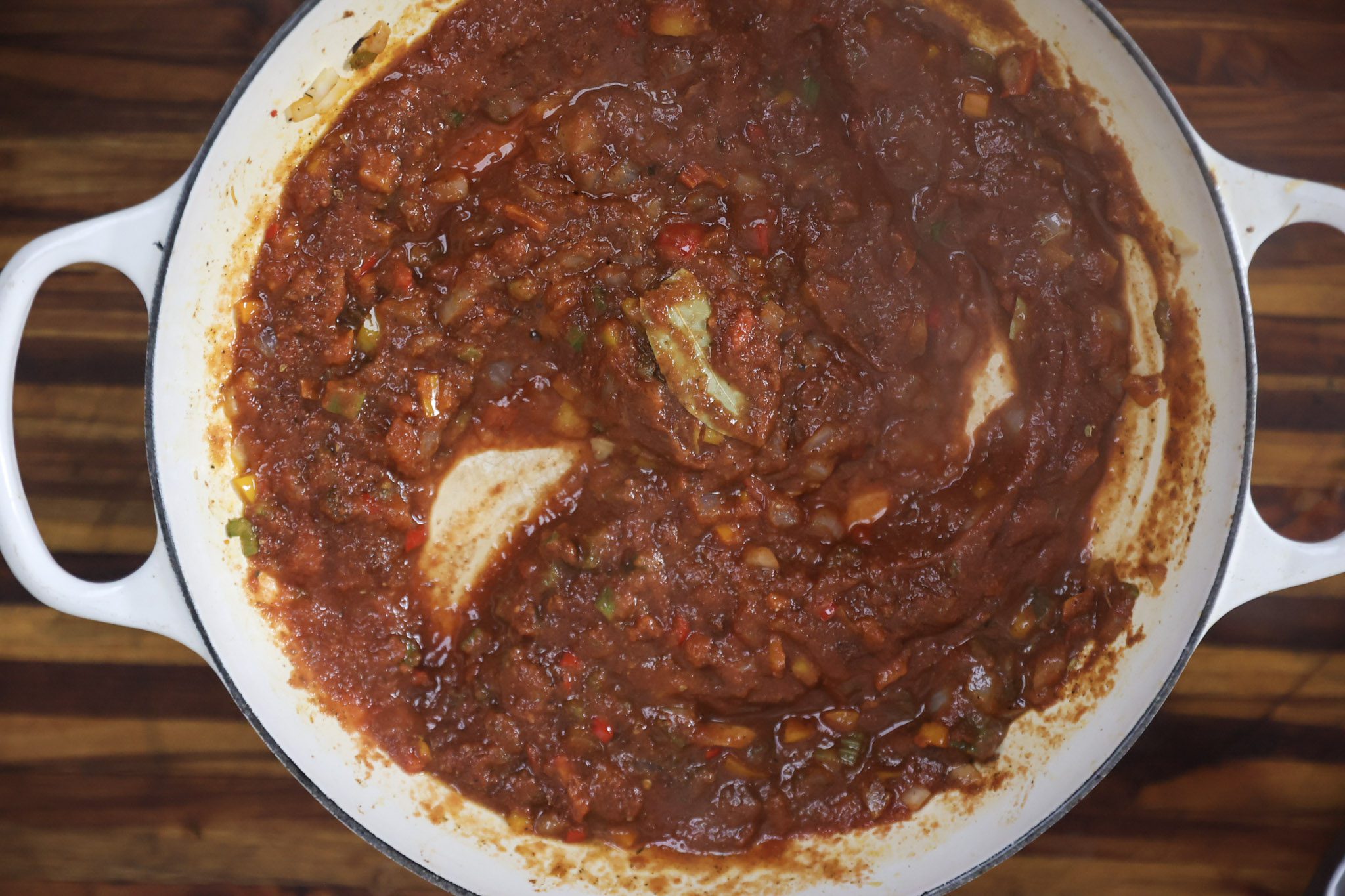
Tomatoes are optional. I’ve tested this both ways. When I want that Creole-style brightness, I add them. When I want a deeper, smokier profile, I skip them. Either way, balance is key; you don’t want acidity overpowering the dish.
Getting the Rice Right (The Real Game)
The rice is where most people lose. I know because I did. Too much liquid, too much stirring, and impatience; that’s the trifecta of bad jambalaya. What changed for me was treating rice like a controlled process. I lightly rinse it, measure my stock carefully, and once it’s in the pot, I leave it alone. No constant stirring, no lid lifting.
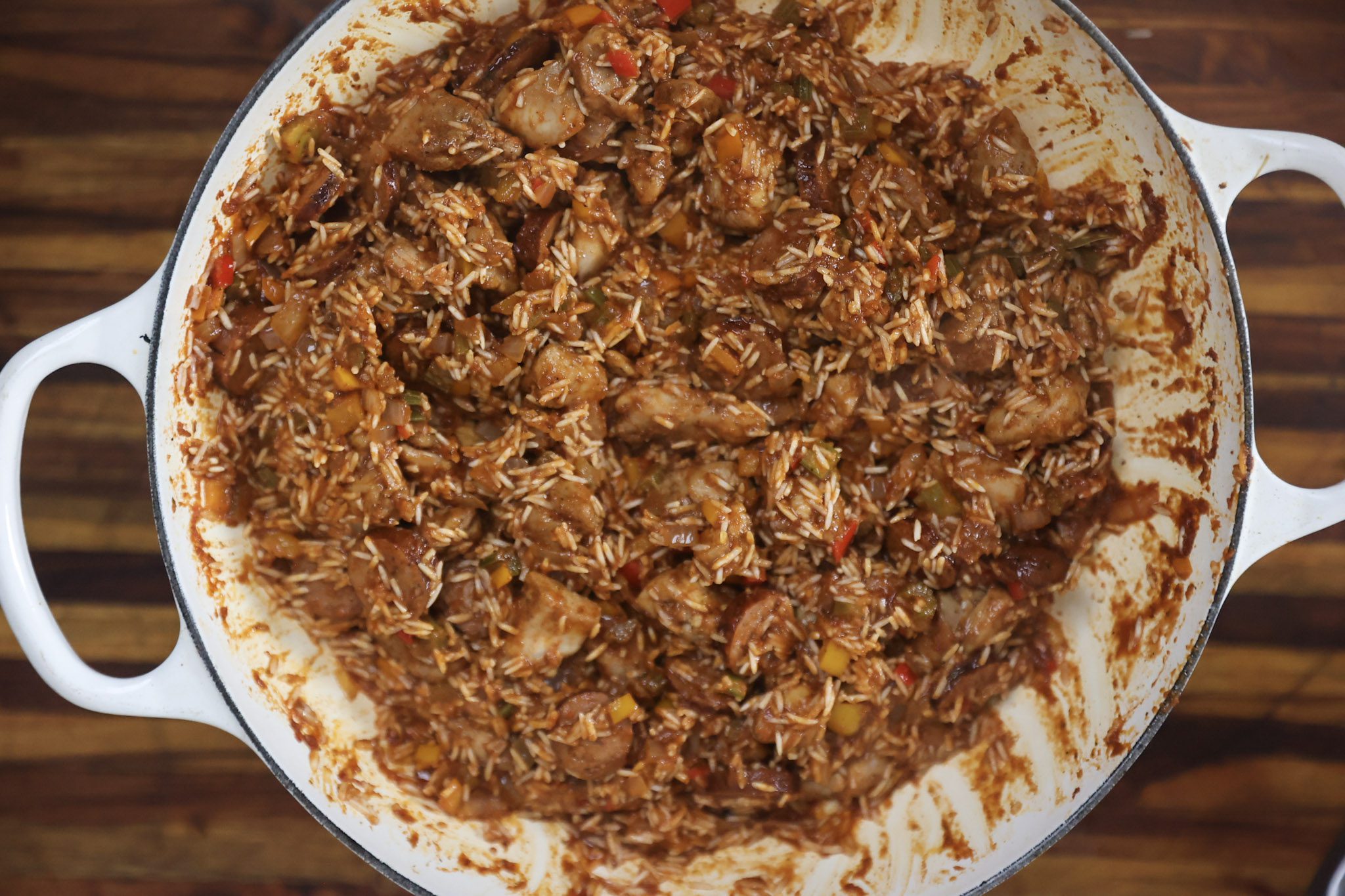
One adjustment I made during testing that really leveled things up was holding back a little stock at the start. It gave me control over the final texture. If the rice needed more moisture, I could add it. But if it’s already too wet, there’s no coming back from that.
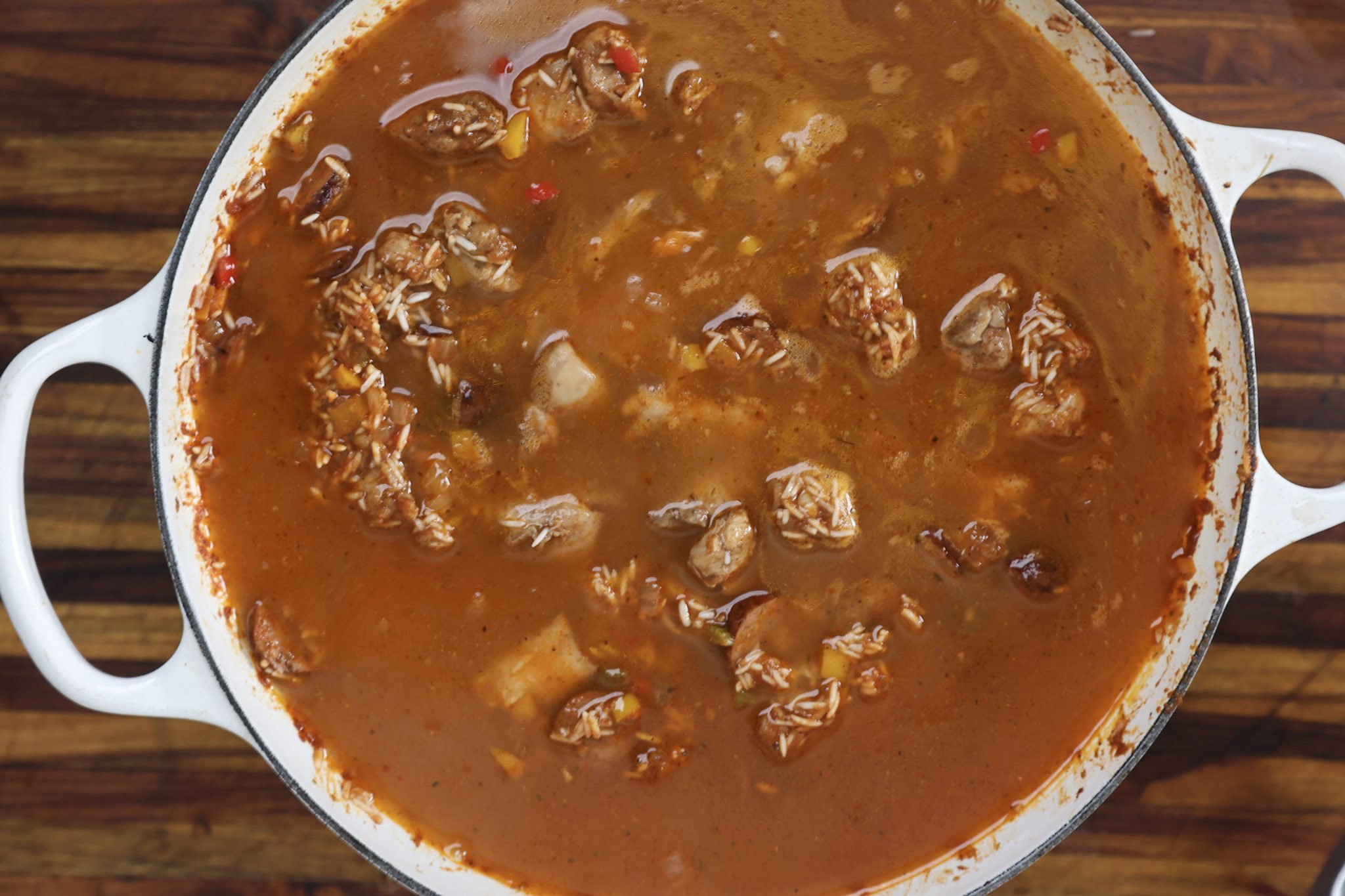
How I Nailed the Final Texture
The biggest unlock for me was understanding that the finish matters just as much as the cook. Once the rice is done, I take the pot off the heat and let it rest, covered. That resting period lets the grains firm up and settle. Then I fluff gently, never aggressivelyand fold in green onions at the end for freshness.
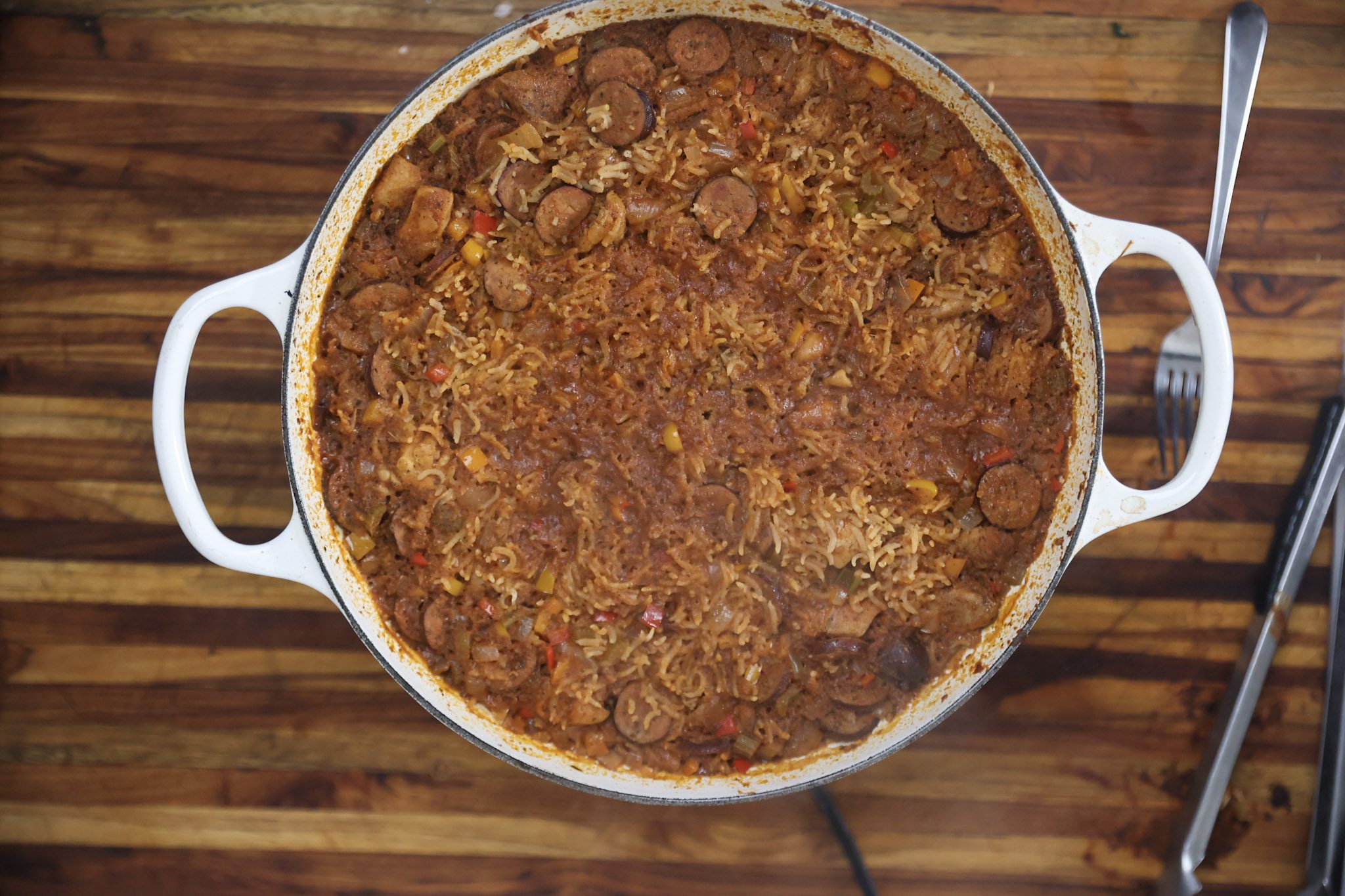
The result is rice that’s tender but holds its shape, coated in flavor but never sticky. That’s the goal every time.
How To Make Video (step by step)

What To Serve With Jambalaya
Jambalaya already brings heat, richness, and depth, so what you serve with it should either balance, cool, or soak up all that flavor. Think contrast and complement, not more heaviness on top of heaviness.
- Crisp (Napa) cabbage slaw (vinegar-based cuts through the spice best)
- Cucumber dill salad for a fresh, juicy contrast
For Soul food menu vibes pair with Southern style Collard greens (especially with smoked turkey) plus a side of fried okra.
For drinks that match the energy go with Southern style Sweet tea or my favorite, Haitian Lemonade.
Variations and Flexibility
You can swap in shrimp at the end for a seafood version, skip tomatoes for a more traditional Cajun profile, or add okra for texture. I’ve tested all of these, and they work, but the technique is what makes the dish, not the variation.
Beats and Eats (music to pair with jambalaya)
For the soundtrack, cue up "One Life to Live" by Pete Rock. That smooth, layered production mirrors how this jambalaya builds flavor step by step, no shortcuts, just rhythm and patience.
Jambalaya will expose you if you rush it. But if you respect the process, build your layers, control your liquid, and trust the steam you’ll end up with a pot that speaks loud with every bite. This is one of those dishes where technique turns good ingredients into something unforgettable.
Keep up with my food exploits on Instagram and YouTube. If you like any of the music you find on the site, visit me at Spotify to find curated playlists.
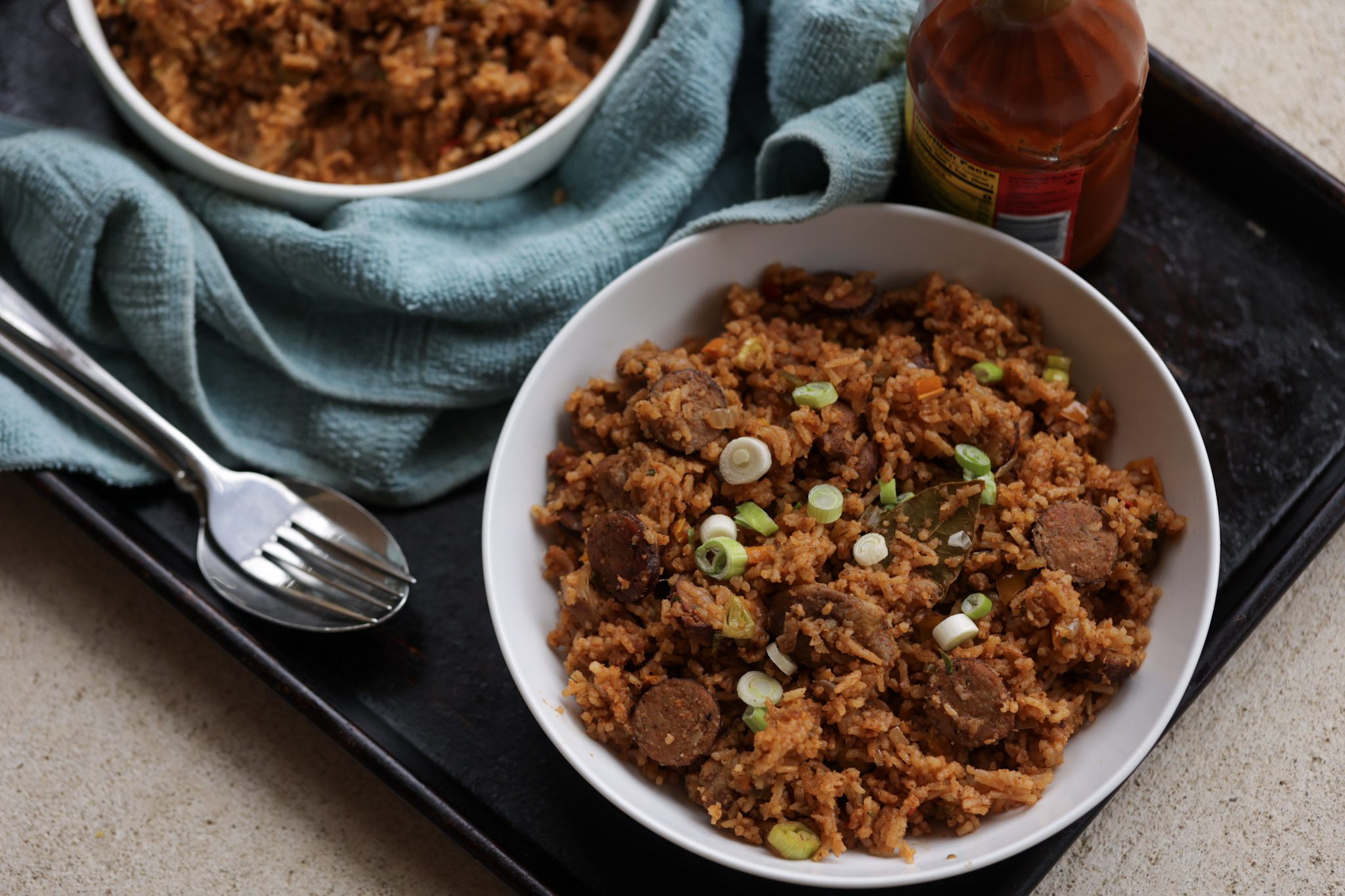
Chicken and Sausage Jambalaya
Ingredients
- ¾ lbs Andouille Sausage sliced into rounds
- 1 pound boneless skinless Chicken Thighs, cut into 1 inch pieces
- 1 ½ cups Jasmine Rice
- 1 tablespoon Cajun Seasoning
- 1 medium yellow onion peeled and diced
- 1 medium bell pepper seeded and diced
- 2 celery stalks diced
- 4-5 Garlic cloves minced
- 14 0 z can crushed tomatoes
- ¼ cup Green Seasoning optional
- 4 thyme sprigs
- 2 Bay leaves
- 1 teaspoon Hot Sauce
- 1 tablespoon Worcestershire Sauce
- 2 ½ chicken stock
- Parsley
- Green Onions
Method
- Preheat oven to 350 degrees F.
- Puree the tomatoes, garlic, 1 teaspoon cajun seasoning, hot sauce, and green seasoning in food processor or blender.
- Heat large skillet or dutch oven on medium heat. Brown sausage 2-3 minutes, remove, and drain on paper towel lined bowl.
- Brown the chicken. Remove, and drain with the sausage.
- Add the onions, peppers, and celery sautéing 2-3 minutes.
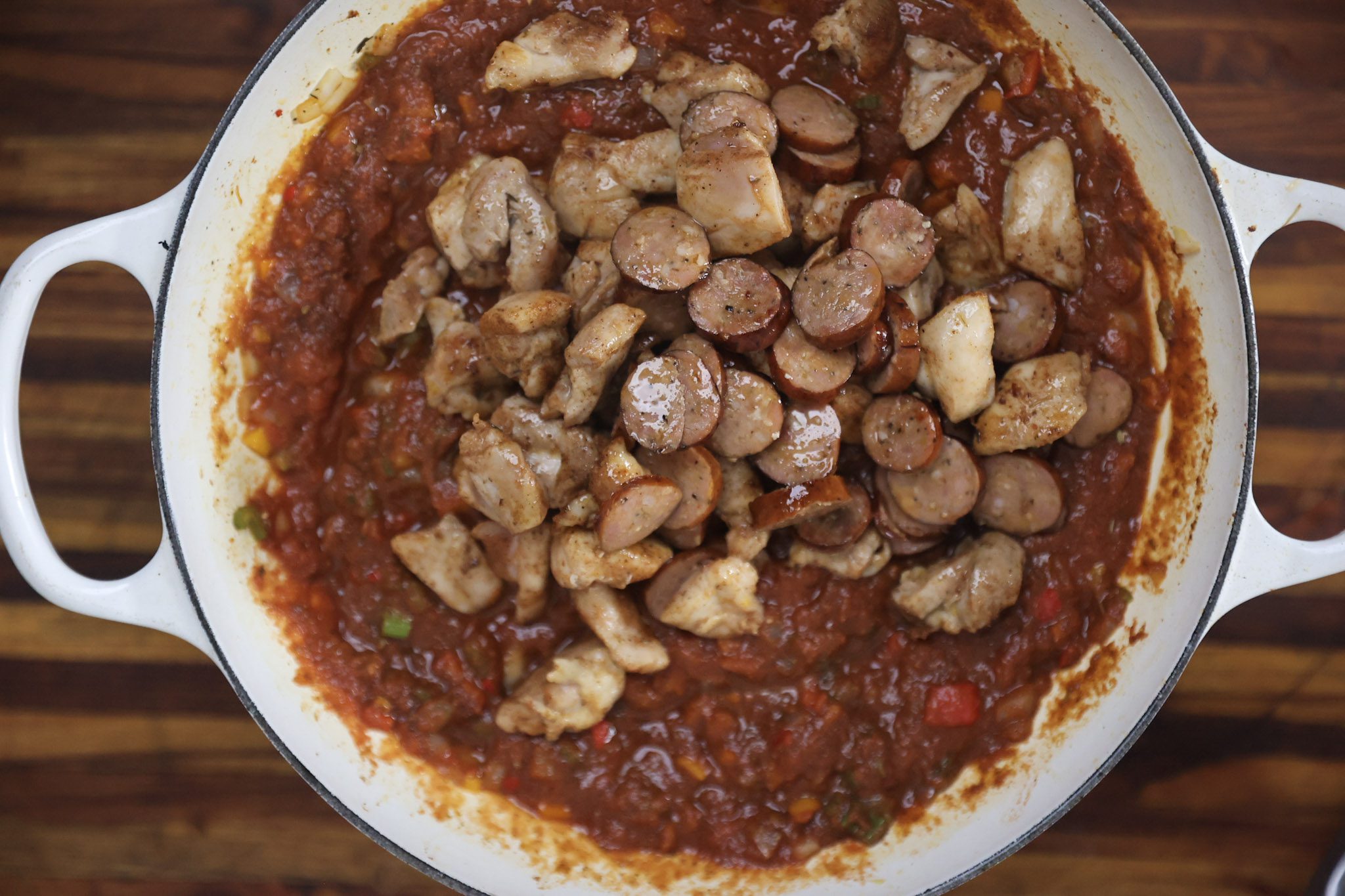
- Add the puree, bay leaves, fresh herbs, Worcestershire sauce, andouille, chicken and half the remaining spices. Stir well and simmer 20 minutes.
- Add rice, mix well cooking for 3-5 minutes.
- Add the stock, bring to boil then reduce to simmer, cover and bake in the oven 18-20 minutes.
- Remove and allow to sit off heat 5 minutes. Remove lid and fluff with fork.
- Fold in green onions and parsley.
Nutrition
Notes
- Brown your meat first Deep color = deep flavor; don’t rush the sausage and chicken sear.
- Build from the holy trinity - Let onions, bell peppers, and celery soften fully before moving on.
- Bloom your spices in fat - This wakes up the seasoning and adds depth early.
- Control your liquid - Measure stock carefully; too much = mushy rice.
- Use long-grain rice – It holds structure and stays separate.
- Don’t over-stir - Once the rice goes in, let it cook undisturbed.
- Keep a steady, low simmer - High heat will break the rice and dry out the pot.
- Let it rest before fluffing - This firms up the texture and finishes the cook.
Leave a comment