
This post may contain affiliate links via Amazon's affiliate advertising program. See privacy policy
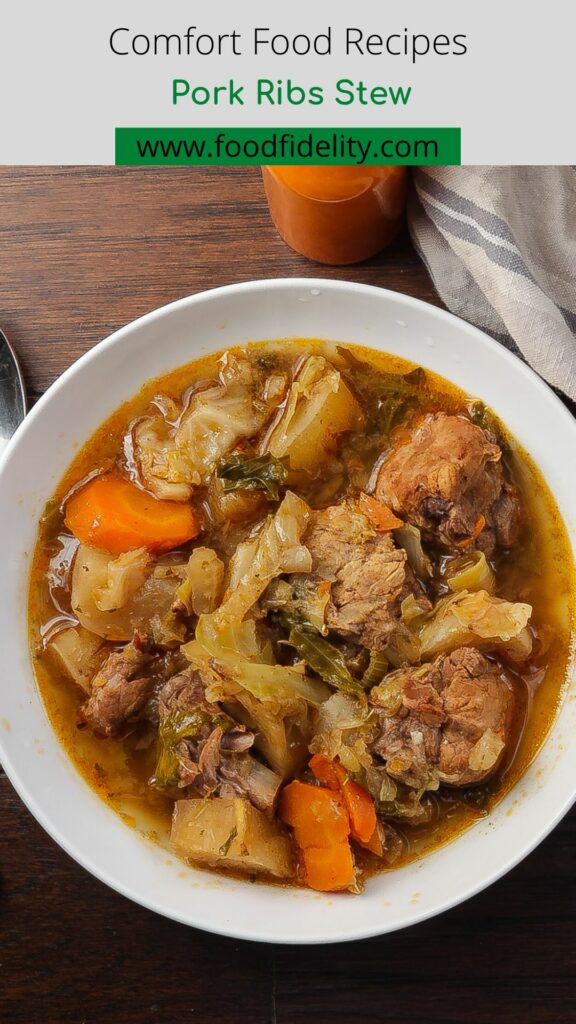
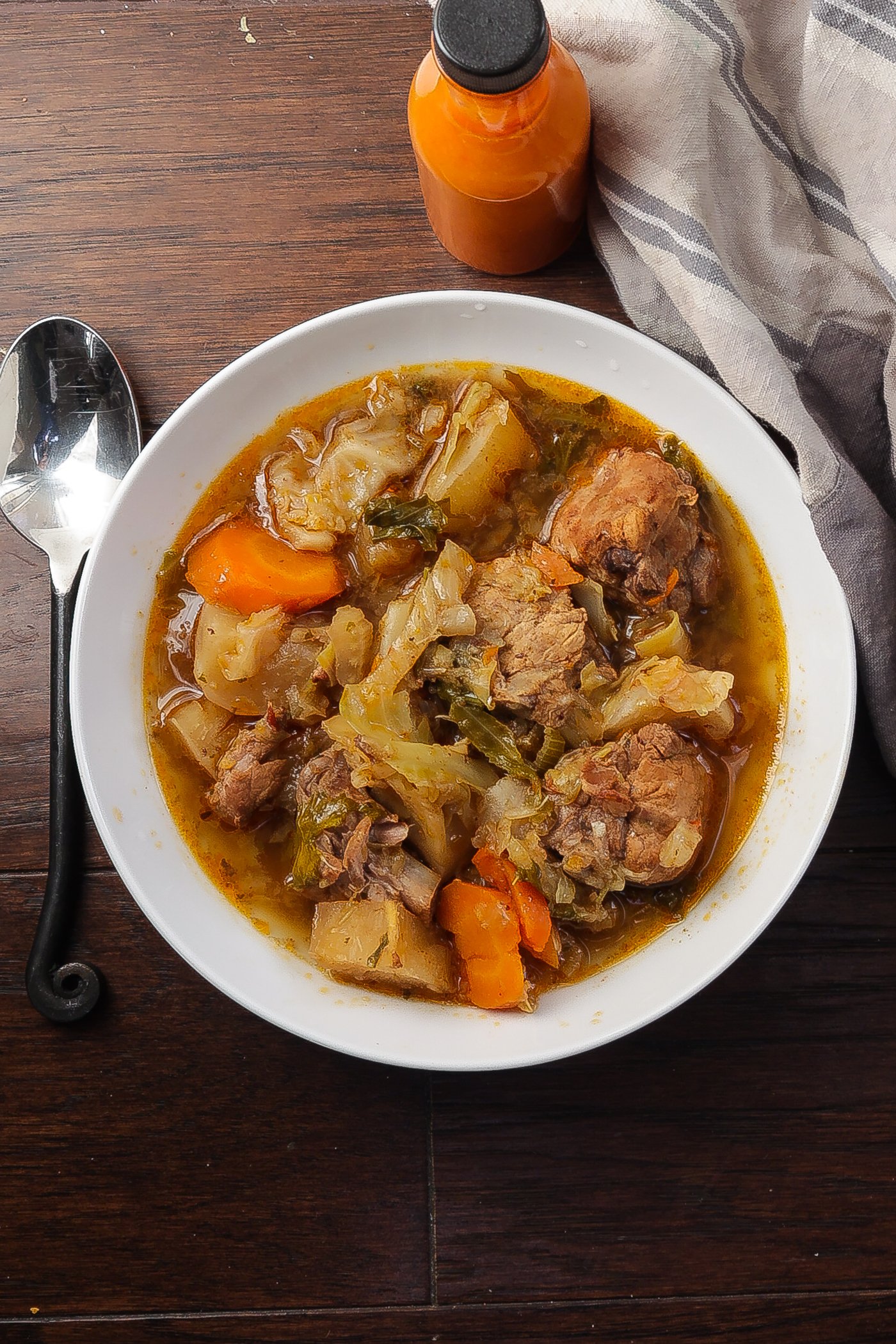
This pork stew with cabbage turns humble ingredients into a deeply satisfying bowl of comfort. Meaty pork rib pieces slowly simmer in apple cider based broth until fork tender, enriching the broth with rich pork flavor while cabbage softens into silky, sweet ribbons that soak up every savory drop. Rooted in the tradition of hearty working-class stews found across the American South and Afro-Caribbean pot cooking, this version balances melt-in-your-mouth pork with the subtle bite of cabbage for incredible texture. Serve it over steamed rice or buttery creamy mashed potatoes with some crusty hot water cornbread to catch every spoonful of the flavorful broth.
Recipe Inspiration
This pork stew dish is really just a smoked pork ribs dish reimagined as a soup. I typically season my ribs with a rub base similar to the spice mix used in the stew.
Similarly I like to spray my ribs with apple juice/cider as they cook to maximize tenderness hence the apple cider based broth. Fennel and yuca just make for great flavor pairings with pork.
Technique Story: The Braise (Sear + Slow Simmer)
This technique is about patience and trust. You brown the pork until it sings, then lower the heat and let the pot do its talking while you listen. Searing builds a savory base, and the slow simmer melts connective tissue, creating tenderness and a broth with body and depth. It feels familiar because it’s steady—nothing rushed, nothing fancy, just time turning effort into ease.
Flavor Profile
Savory and gently sweet with an herbed backbone. Earthy roots anchor the bowl, greens add bitterness and balance, and apple cider lifts the richness with a soft, rounded tang.
Key Flavor Ingredients (What Each One Does)
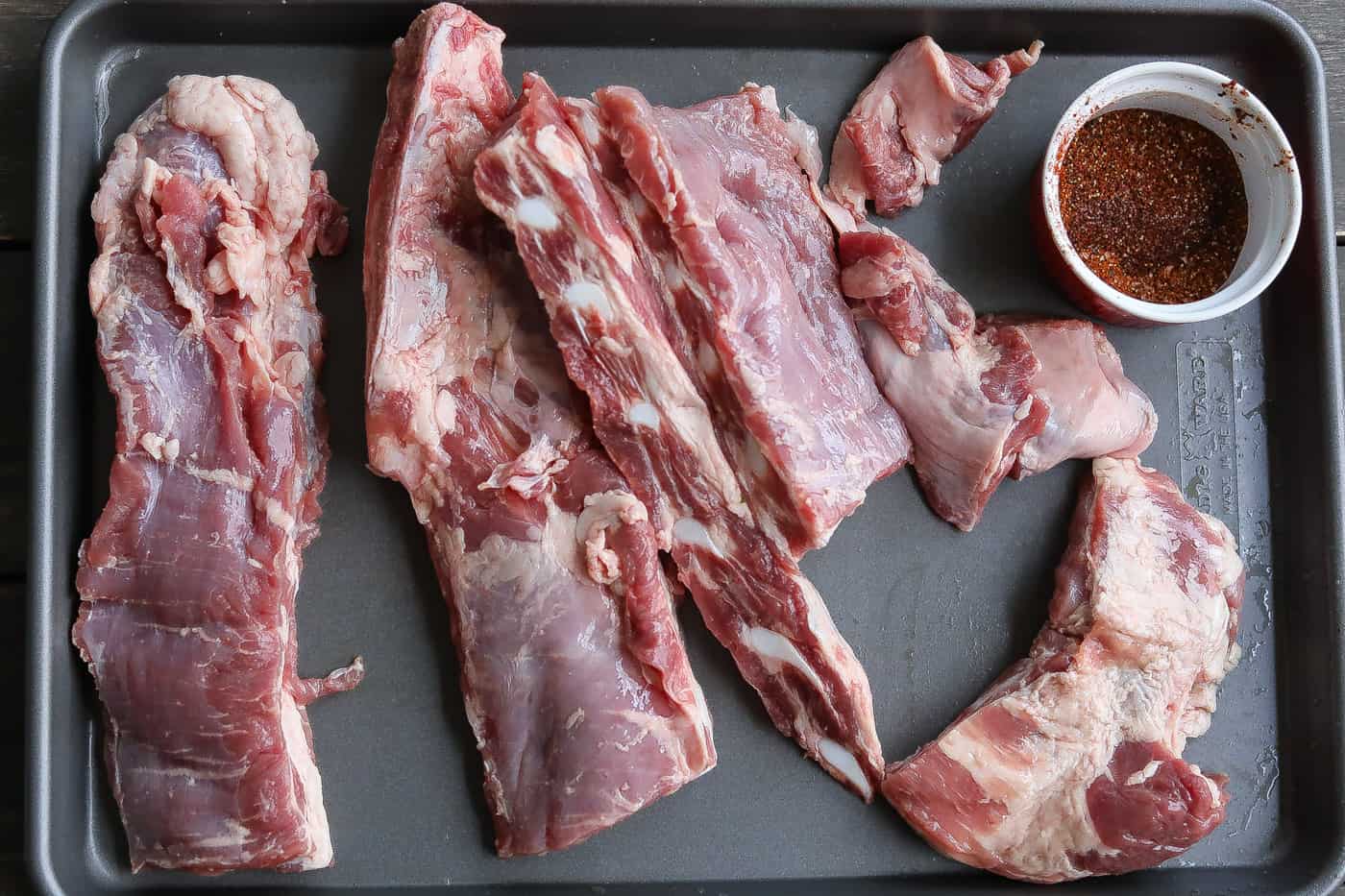
- Pork rib meat: Brings richness and collagen that break down into silky body. I prefer bone-in cuts like pork shoulder or pork butt, but boneless pork tenderloin works in a pinch. If you don't mind the work, you can trim a rack of ribs yourself and use pork rib meat like I did.
- Fennel: Adds subtle anise sweetness that brightens the pork.
- Yuca: Contributes starch and heft, thickening the stew naturally.
- Epis Seasoning: Adds a fresh, herbal punch with garlic, herbs, and citrus that brightens and deepens overall flavor.
- Cabbage: Softens into sweetness and soaks up broth.
- Apple cider: Deglazes the pot and adds gentle acidity.
- Chicken broth: Forms the savory foundation that carries flavor.
- Turnips: Provide peppery earthiness that keeps the stew grounded.
- Turnip greens: Add bitterness and a Southern backbone to finish the pot.
What Are Pork Riblets
Pork riblets are basically rib tips or the short ends of a slab of ribs. Not to get all technical but it's those small, flavorful cuts of meat taken from the end of pork spare ribs. Pork riblets are known for their tender and juicy qualities, making them a popular choice for various cooking methods, including grilling, roasting, braising, or stewing.
Due to their small size, they are often enjoyed as finger food or appetizers, or like in my house - a whole meal with fries and sweet bbq sauce. The meat on rib tips tends to be well-marbled, contributing to their succulent texture and rich flavor when cooked which is why I prefer them in a stew.
What Is Haitian Epis Seasoning
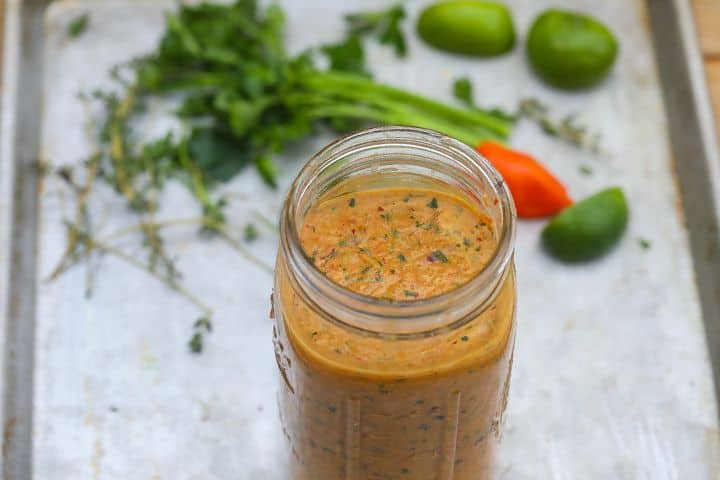
Haitian epis seasoning is a flavorful and aromatic blend of herbs and spices that is a staple in Haitian cuisine. It serves as a key ingredient in many Haitian dishes, adding depth and complexity to the flavor profile.
It's basically the Haitian version of green seasoning or sofrito. It's used the exact same way. The exact ingredients in Haitian epis seasoning can vary depending on where you're from, but it typically includes a combination of the following:
These ingredients are finely blended or processed together to create a vibrant and aromatic seasoning paste. Haitian epis is often used as a marinade for meats, a base for stews and soups, or as a seasoning for rice and other dishes.
Why This Dish Works
Pork rib meat does collagen release, which creates a rich, silky broth. This approach comes from Southern and Caribbean stews, where cooks rely on bone-in cuts rather than lean meat for depth.
The braise does controlled tenderness, which creates fork tender pork without drying. This approach comes from old school dutch oven cooking, where cooks rely on time and moisture rather than high heat.
Yuca and turnips do natural thickening, which creates body without flour. This approach comes from root-forward cooking traditions, where cooks rely on starch vegetables instead of roux.
Apple cider deglazing does flavor lifting, which creates balance against richness. The fruit acidity rounds things out in this heavy pot.
Recipe Variations & Ingredient Substitutions
No yuca?
Use russet potatoes instead. They deliver similar starch and comfort, though they’ll be softer and less chewy.
No turnip greens?
Use collard or mustard greens. They deliver bitter backbone, though they’ll be slightly milder or sharper.
No apple cider?
Use dry white wine or apple juice with a splash of vinegar. It delivers acidity and sweetness, though it will be less rounded.
Serving Suggestions
Serve this pork meat stew with crusty bread, cornbread, or spooned over rice to catch every drop of broth. It only gets better the next day.
Beats & Eats
“Funkentology” – Blk Odyssy
Blk Odyssy's song "Funkentology" serves as the perfect musical companion to a hearty pork meat stew, creating a sensory experience that transcends the culinary world.
The infectious beats and rhythmic grooves of "Funkentology" mirror the rich and robust flavors present in the pork stew. The pulsating bass lines sync seamlessly with the savory notes of the meat, enhancing the overall enjoyment of each bite.
The dynamic and layered instrumentation of the song parallels the diversity of seasonings in the stew – from the earthy thump echoing the allspice to the smoky echoes resonating with the smoked paprika.
Test Kitchen Tips for Best Results
- Brown the pork well - color equals flavor.
- Cut vegetables evenly for consistent tenderness.
- Rest the stew 10 minutes off heat to let flavors settle.
- Start with high-quality pork meat. Opt for cuts with some fat marbling, as it adds richness and depth to the stew.
- Incorporate diced bacon. The rendered fat and smokiness will infuse the stew with a savory depth and umami undertones.
- Include a variety of vegetables like yuca, turnips, and cabbage. Each contributes a unique texture and flavor, making the stew more interesting and satisfying.
- For an even more developed flavor, consider letting the stew rest in the refrigerator overnight. This allows the ingredients to meld and intensify, resulting in a more complex taste.
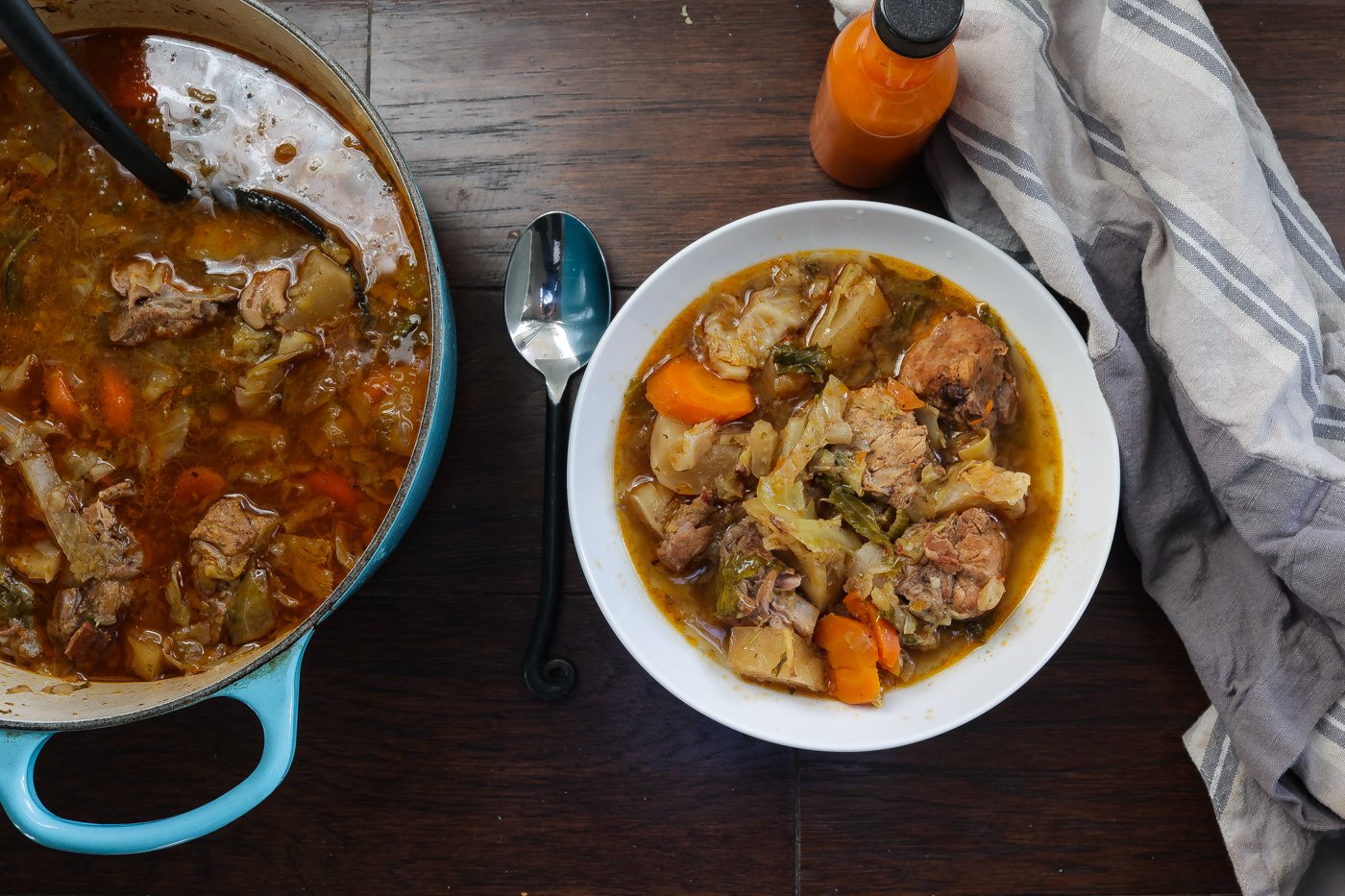
This delicious pork stew recipe proves the deepest comfort always comes from a pot that takes its time.
Indulge in this fun mix of flavors that is this Pork Rib Stew. From the succulent pork riblets to the aromatic Haitian epis seasoning, each ingredient plays a crucial role in creating an eating experience that will leave your taste buds singing. So, gather your ingredients, follow the steps, and savor the rich and nuanced experience of this extraordinary pork stew.
This culinary journey transcends boundaries, bringing together Southern warmth and Caribbean vibrancy in a single, flavor-packed bowl. As you savor the last spoonful, you're left with the lingering satisfaction of a fusion masterpiece, a testament to the incredible possibilities when diverse culinary influences unite on the plate.
If you make this great pork stew recipe or any other from the site, please come back and leave me a comment below with your feedback. Definitely take a photo of the dish and be sure to tag #foodfidelity so that I can see them.
You can also keep up with my food exploits as well as original recipes! You can find me on Instagram, Facebook, Twitter, and Pinterest. If you like any of the music you find on the site, visit me at Spotify to find curated monthly playlists.
Lastly, go to my YouTube channel and subscribe to be notified when new weekly videos are uploaded.
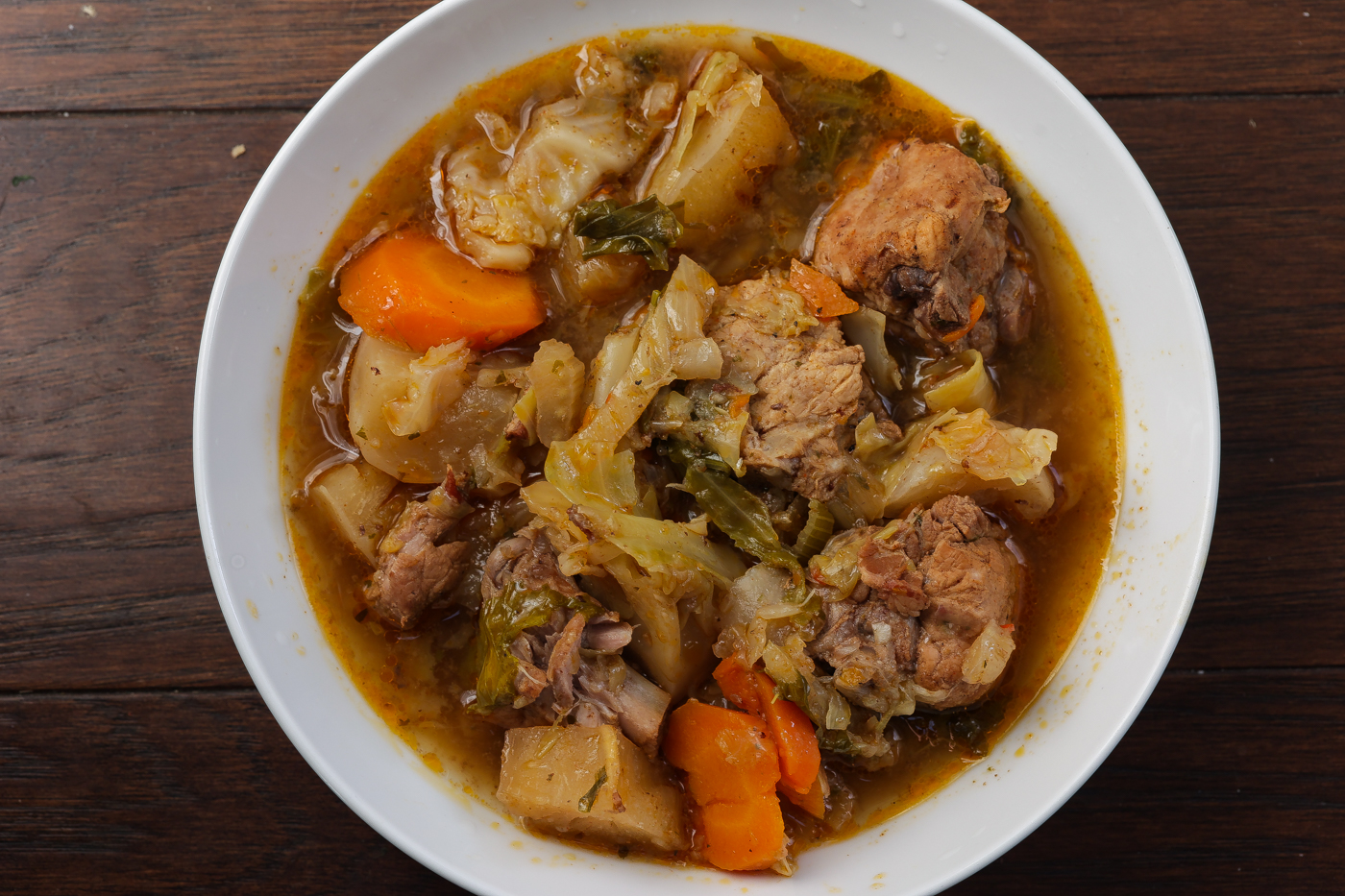
Hearty Pork Stew Recipe with Cabbage
Ingredients
- 2 pounds Pork Stew Meat
- 4 strips applewood smoked Bacon diced
- 1 Fennel bulb stems and core removed, diced
- 1 Yellow Onion diced
- 2 large Carrots peeled and chopped
- 1 medium Yuca peeled and chopped
- 1 medium Cabbage chopped
- 3 small Turnips Roots chopped
- 3 Turnip Green Tops roughly chopped
- 1 cup Haitian Epis Seasoning
- 1 cup Apple Cider
- 3 cups Chicken Broth
- ½ teaspoon Allspice
- 1 teaspoon Smoked Paprika
- 1 teaspoon Black Pepper
- 1 teaspoon Kosher Salt
Method
- Add all the dry spices together in a small bowl or ramekin. Mix well. Use about a third to season the pork. Set the rest aside.
- In a large pot, heat oil over medium-high heat brown pork bacon partially to render the fat. You only want browned pork. Do not cook fully as we are not going for crispy bacon in this dish.


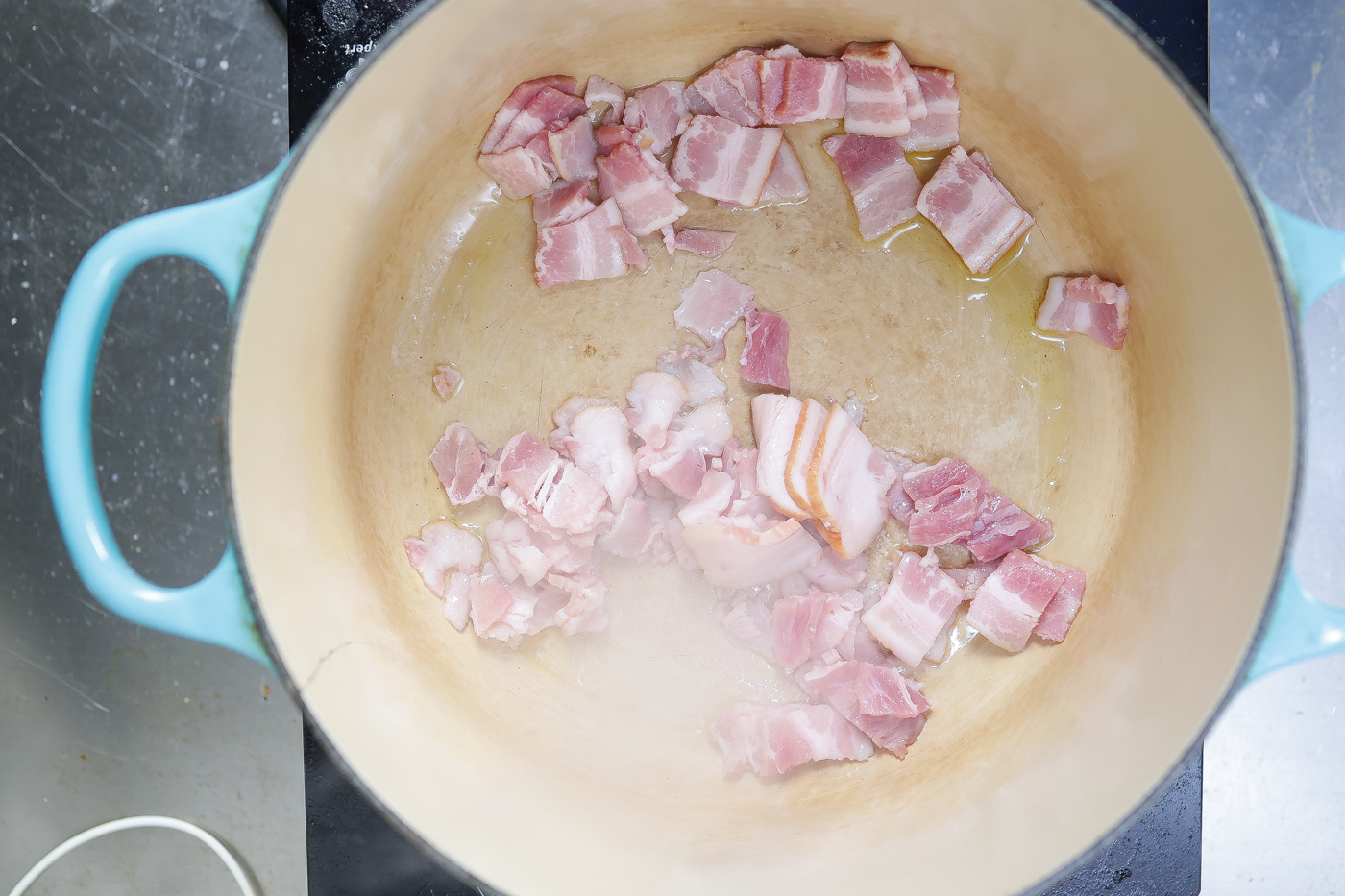
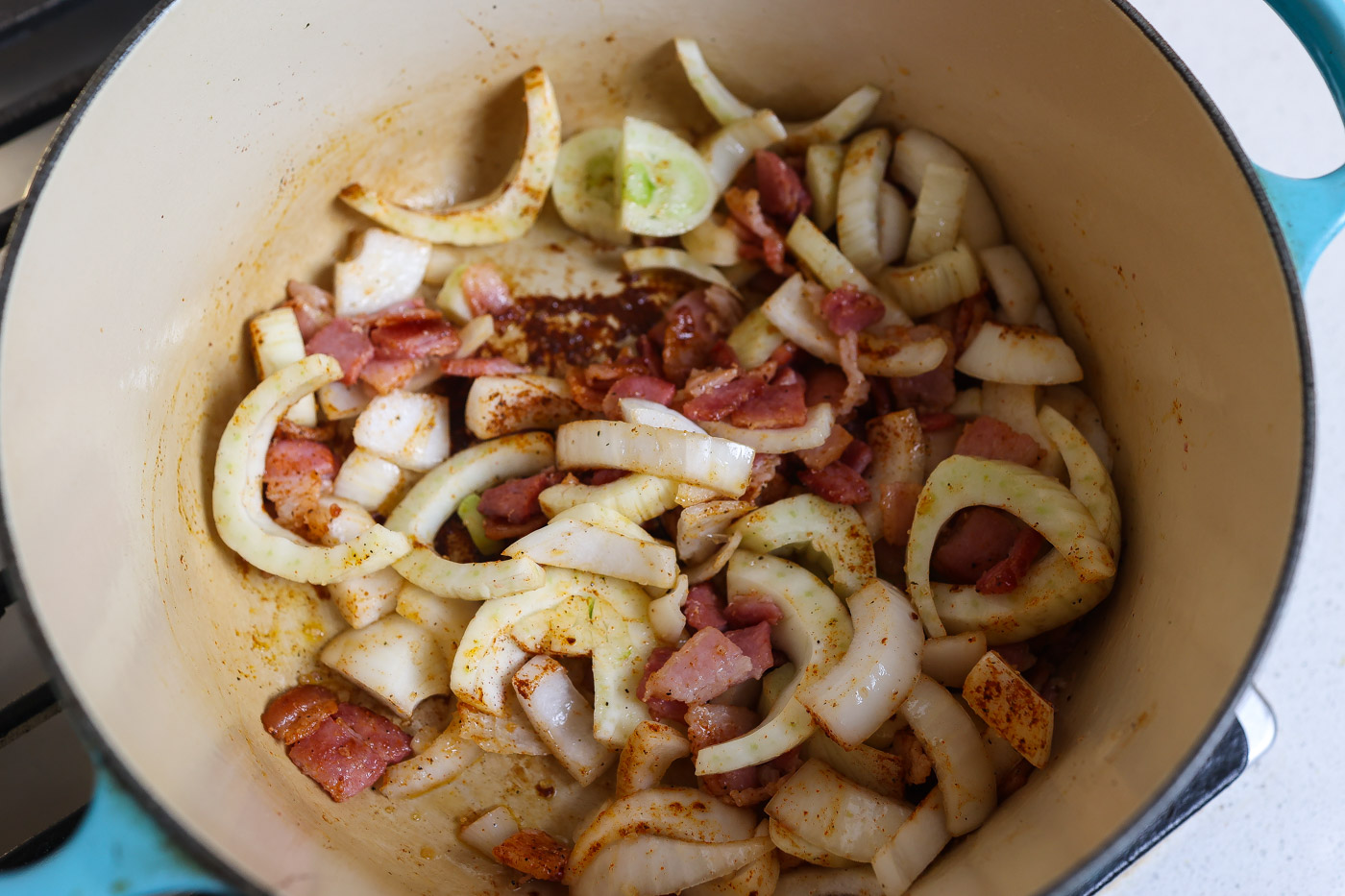
- Push all the bacon to one side of the pan. Add fennel and onions. Sauté 2-3 minutes with dash of the spice mix. Heating the spices will help them bloom and infuse their goodness into the final dish.
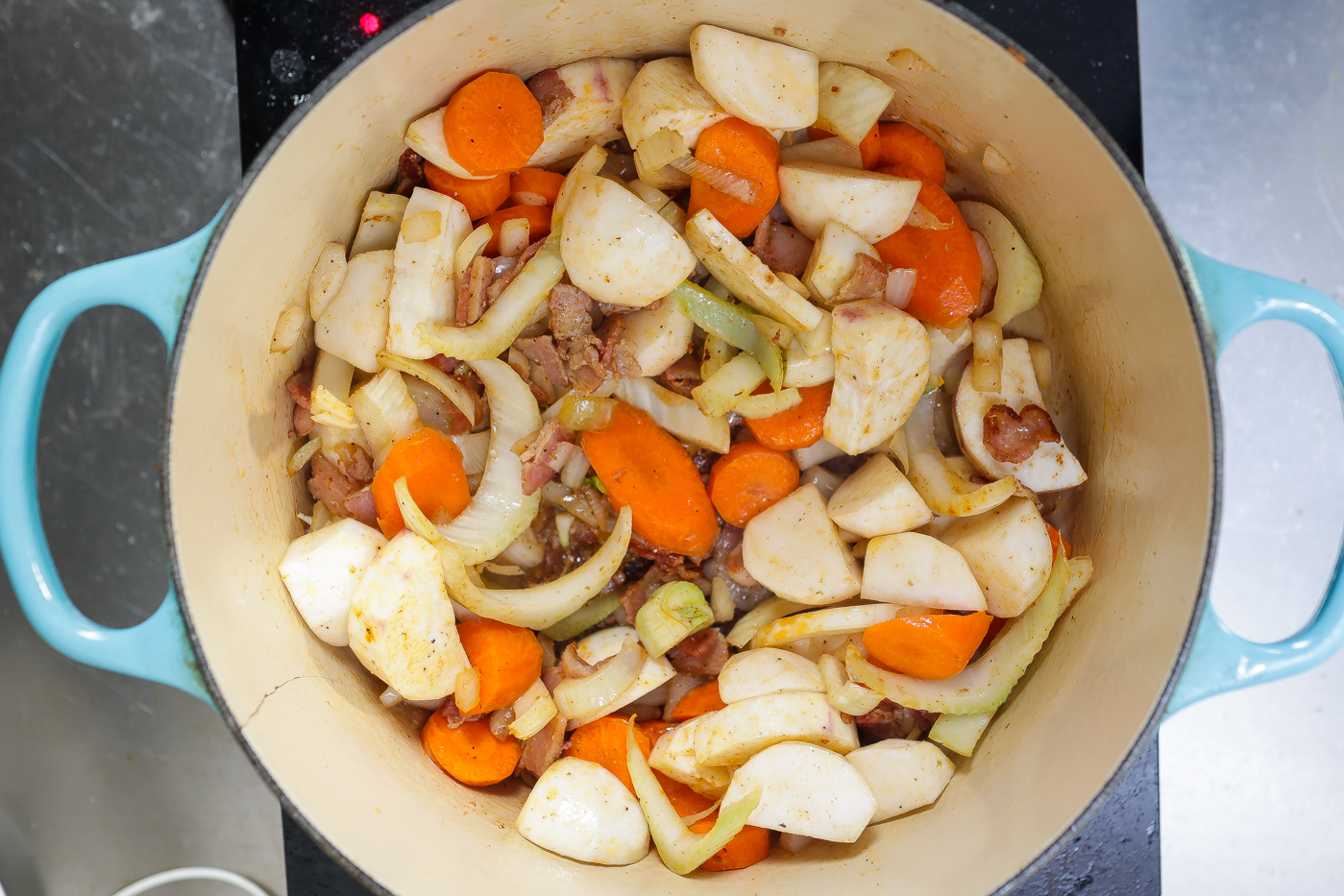
- Add the carrots, turnips (roots and green tops), yuca, and cabbage and continue sauteing (3-5 minutes) until the vegetables are tender.

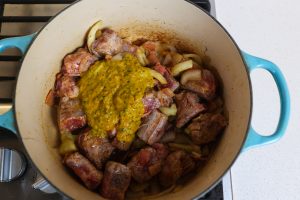
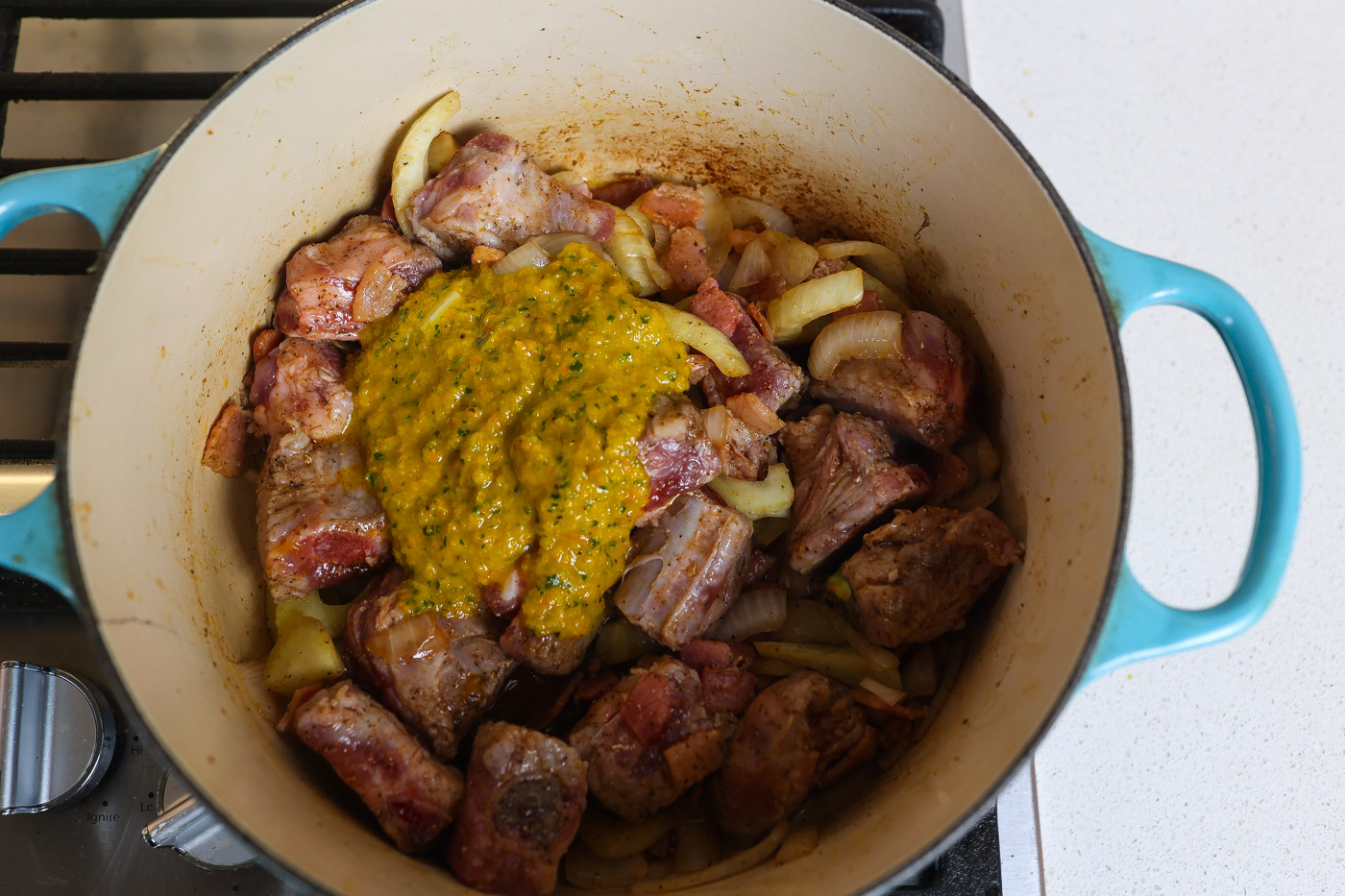
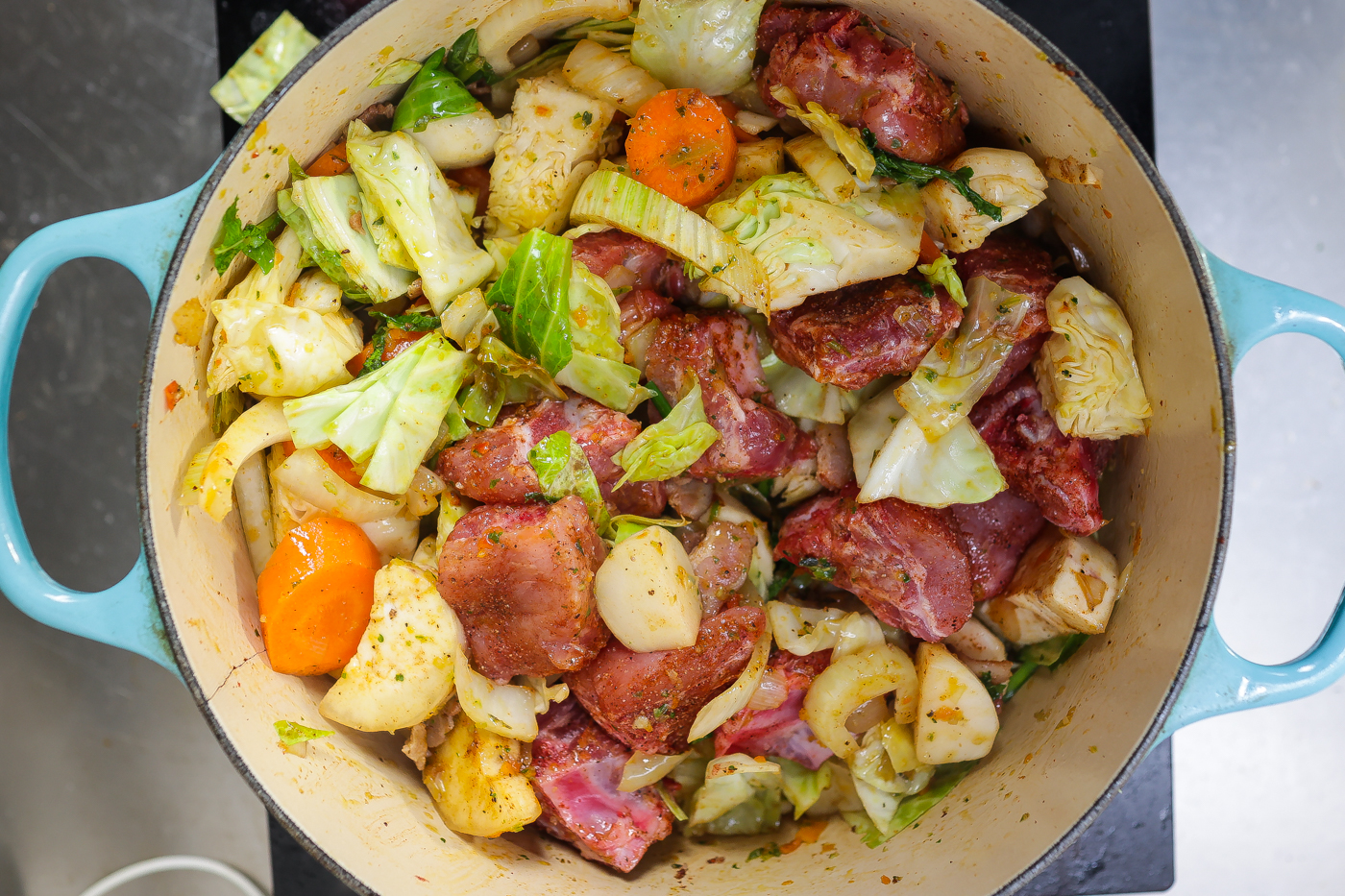
- Add the epis, half of the remaining spices, and the pork ribs. Mix well so that the ingredients get coated as much as possible with all the flavor sitting at the bottom of the pot.
- Add the apple cider. Deglaze the pot by using a wooden spoon to scrape up any brown bits stuck to the bottom of the pan. This is a flavor boost.
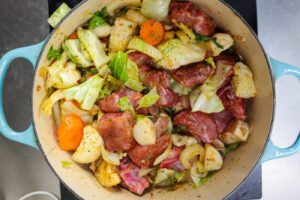
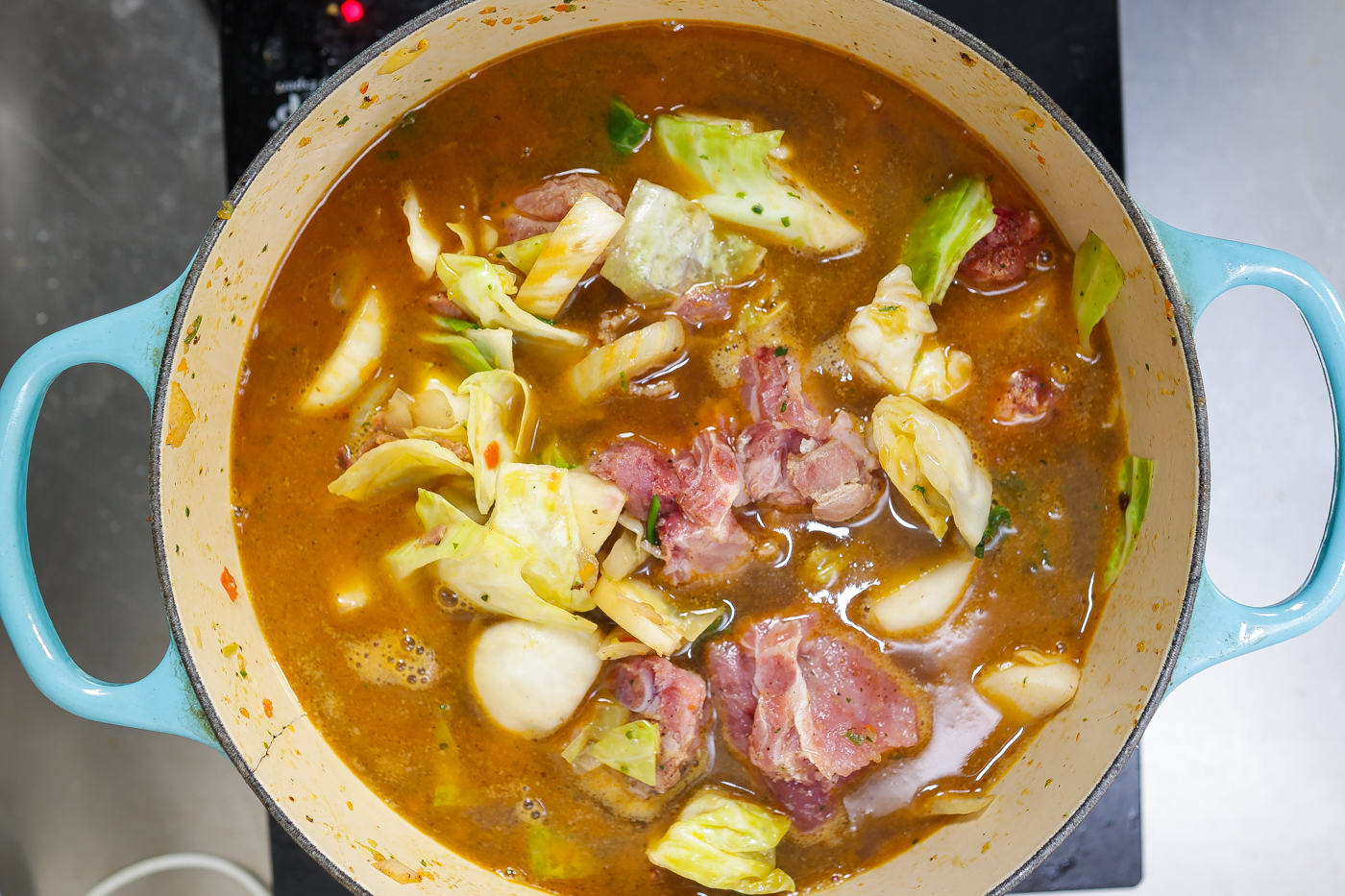
- Add the chicken stock plus the last of the spices and mix well. Cover the pot with the lid. Bring to a simmer and cook 2-2 ½ hours until the pork is super tender and the bones can easily be pull from the ribs.
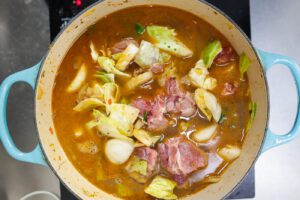
- Add a splash of apple cider vinegar the last 5 minutes to open things up a bit. Serve hot, garnished with fresh herbs.
Nutrition

Notes
- Start with high-quality pork meat. Opt for cuts with some fat marbling, as it adds richness and depth to the stew.
- Use aromatic vegetables like fennel, onions, and garlic. These ingredients add layers of flavor and complexity to the stew.
- Incorporate diced bacon. The rendered fat and smokiness will infuse the stew with a savory depth and umami undertones.
- The inclusion of Haitian epis seasoning adds a burst of Caribbean flavors, with herbs like parsley, thyme, and scallions, intensifying the overall taste profile.
- Balance spices like allspice and smoked paprika to achieve a harmonious blend. These spices provide warmth and a hint of smokiness, enhancing the overall aroma and taste.
- Deglazing the pot with apple cider not only adds sweetness but also helps lift the flavorful bits from the bottom, incorporating them back into the stew.
- Include a variety of vegetables like yuca, turnips, and cabbage. Each contributes a unique texture and flavor, making the stew more interesting and satisfying.
- Allow the stew to simmer on low heat for an extended period. Slow cooking allows the flavors to meld, intensifying the taste and tenderness of the pork.
- Add fresh herbs like parsley or cilantro just before serving. The burst of freshness adds a vibrant top note, balancing the richness of the stew.
- For an even more developed flavor, consider letting the stew rest in the refrigerator overnight. This allows the ingredients to meld and intensify, resulting in a more complex taste.
Leave a comment