
This post may contain affiliate links via Amazon's affiliate advertising program. See privacy policy
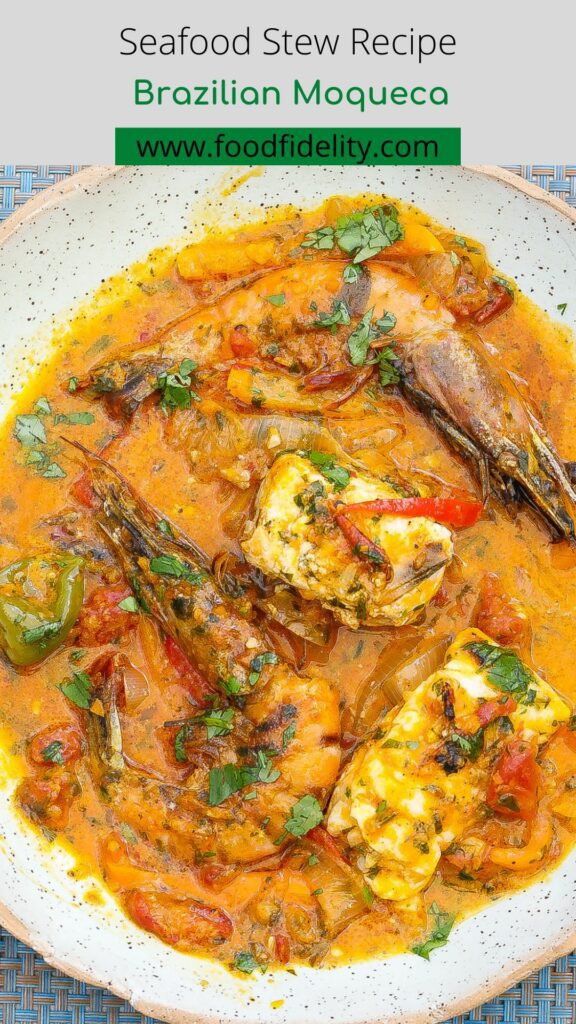
This Moqueca aka Brazilian fish stew is a rich, creamy curry-like fish stew made with shrimp that is perfect for a festive holiday dinner or a Sunday dinner change-up.
The seafood is slowly simmered in the most amazing broth that the fish and shrimp flavors add to. Garlic, onions, and bell peppers are the building blocks of the dish but it's the coconut milk and red palm oil give this version its character.
This moqueca baiana is a cornerstone of Brazilian food, born in Bahia where African, Indigenous, and Portuguese influences simmer in the same pot. Built on coconut milk, palm oil, and fresh seafood, this seafood stew delivers bold flavor without heavy technique—no browning, no rushing, just layered aromatics and gentle heat. In about 35 minutes, you’ve got a vibrant stew that feels special but cooks easy.
If you like this creamy fish stew, you'll love Colombia's classic fish stew Cazuela de Mariscos or Caribbean shrimp and okra stew.
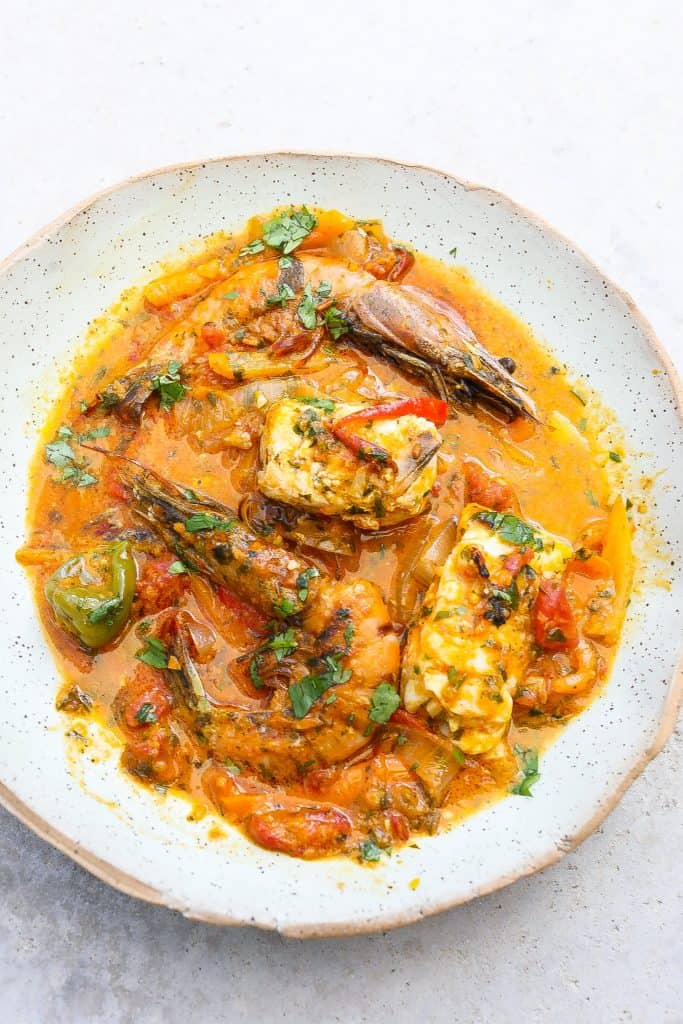
What is moqueca?
Moqueca is a fish stew and basically one of the national dishes of Brazil along with couve mineira aka Brazilian collard greens.
Beats and Eats: Music to pair with moqueca
Now playing: “Que Beleza” – Tim Maia
This song glides—warm, joyful, and effortlessly cool—just like moqueca baiana when it’s done right. Tim Maia’s groove is rich without being loud, soulful without strain. Let it play while the coconut milk and palm oil meld; both reward patience and vibe over force.
Tim Maia's "Que Beleza" makes for the perfect song pairing to Moqueca. "Beleza" translated to English means beauty, but as slang depending on context can have different interpretations from "how beautiful" to "awesome." The song itself is bass-heavy, fun, and super funky which is also how I would describe this moqueca. It's also deeply soulful and when you taste good moqueca you can definitely taste it.
Flavor Profile: What Makes Moqueca Baiana Special
This Brazilian fish stew is creamy, gently tangy, and deeply aromatic, with richness balanced by citrus and natural seafood sweetness. Unlike many stews, moqueca relies on layering and freshness instead of browning, keeping flavors bright and clean.
Key Flavor Ingredients (and Why They Matter)
- Palm Oil (Dendê) – The heart of moqueca baiana. It brings red color, aroma, and unmistakable Afro-Brazilian depth.
- Coconut Milk – Adds lush creaminess and rounds out heat and acidity.
- Lime Juice – Brightens the stew and sharpens seafood flavors.
- Fire-Roasted Tomatoes – Provide gentle acidity and smoky undertones.
- Shrimp – Add sweetness and briny richness to the broth.
- Halibut – Firm, clean-tasting fish that holds together while absorbing flavor.
Serving Suggestions
Serve moqueca baiana with some steamed white rice, or coconut ginger rice. It's great at soaking up all that rich broth/gravy. I also keep a side of black beans on hand as well; it's either Brazilian black beans stew or Cuban style black beans.
If you need an appetizer pairing to go with this, go with this delicious smoked fish dip and top things off with a refreshing glass of Brazilian lemonade.
Recipe Variations & Ingredient Substitutions
- No Palm Oil: Use olive oil, but expect a lighter flavor.
- Different Fish: Cod, snapper, or sea bass work well.
Test Kitchen Tips for Best Results
- Add seafood in stages. Fish first, shrimp last to avoid overcooking.
- Simmer gently. Boiling toughens seafood.
- Finish with lime. Acid at the end keeps flavors alive.
- Palm oil can be found in specialty grocery stores focused on African or Caribbean foods
- None of the ingredients except for the habanero chili contain any spicy elements. Since we only use the chili whole there is no risk of heat.
- I'm team halibut. The firmer the fish the better. Bass, snapper, and grouper also work well.
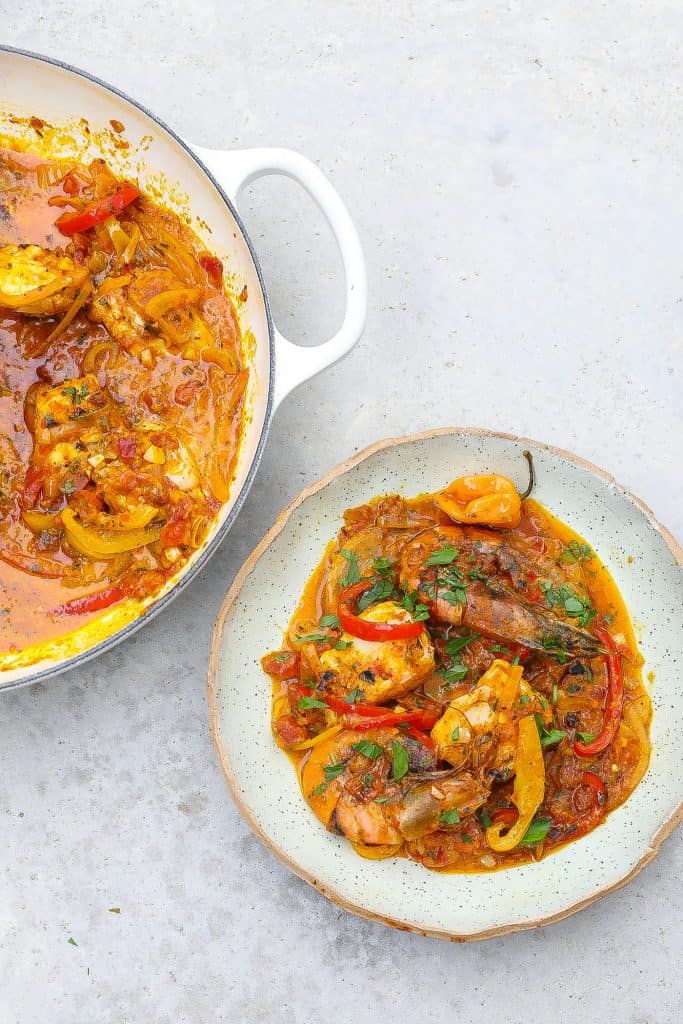
If you’ve been curious about Brazilian food or want a seafood dish that feels both comforting and transportive, this Brazilian fish stew delivers. Moqueca baiana isn’t just a recipe—it’s rhythm, heritage, and warmth in a bowl, best enjoyed with music playing and nowhere to be but right here.
If you make this moqueca baiana recipe, please come back and leave me a comment below with your feedback. Definitely take a photo of the dish and be sure to tag #foodfidelity so that I can see them.
You can also keep up with my food exploits as well as original recipes! You can find me on Instagram, Facebook, Twitter, and Pinterest. If you like any of the music you find on the site, visit me at Spotify to find curated monthly playlists.
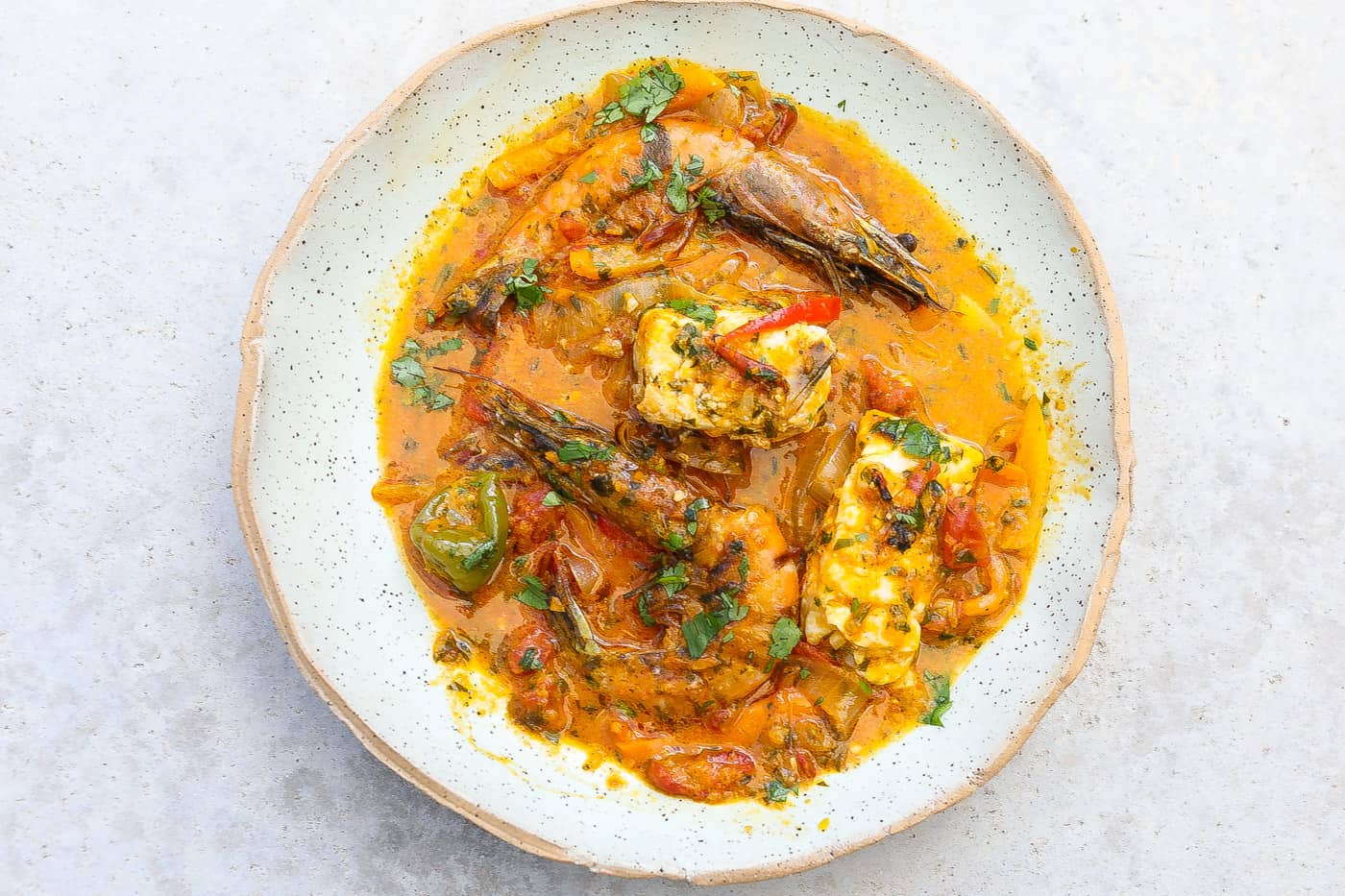
Brazilian Fish Stew (moqueca Baiana)
Ingredients
- 3 medium cloves garlic smashed
- ¼ cup fresh lime juice
- 1 teaspoon kosher salt
- 1 teaspoon black pepper
- ½ tablespoon smoked sweet paprika
- 1 lb halibut
- ½ lbs fresh shrimp peeled and deveined
- 2 tablespoon palm oil
- 1 medium white onion thinly sliced
- 2 medium bell peppers any color, thinly sliced
- 1 cup epis
- 14 oz can coconut milk
- 14 oz can fire roasted tomatoes
- ½ cup cilantro leaves and thin stems coarsely chopped
Method
- Remove the skin from the fish if present. Cut the fish into 1 inch chunks and place into a mixing bowl. Add the unpeeled shrimp and season with the spices, garlic, and lime juice. Allow to marinate refrigerated for 30 minutes.
- While the seafood marinates, chop/slice your vegetables and mix the spices together in a small bowl or ramekin.
- Heat a large skillet on low heat. Add the palm oil and make sure it covers the bottom of the skillet fully. Add the garlic and allow it to cook on low 30 seconds. Add the onions for 1 minute and then add the sliced bell peppers. Cook just long enough for the vegetables to soften some. add a third of the spice mix.
- Add the tomatoes, coconut milk, epis seasoning, and half the remaining spices. Mix well and reduce the sauce so that it thickens. This should take about 8-10 minutes.
- Add the cilantro and mix in well. Remove about 1 cup of sauce from the pan and set aside.
- Add shrimp and cook 2 minutes per side.
- Add the chunks of fish. Top with the reserved sauce and simmer 2-3 minutes until fish is cooked through. Serve.

Sounds delicious and filling with the potatoes!
Original moqueca is from Vitória- ES State.
And also doesn't use coconut oil.
Never claimed this was "original" and coconut oil isn't listed in the ingredients. This style of Moqueca is similar to the style in the Bahia region where they definitely use coconut milk due to African cultural influences. Did you even make the dish? Or did you just rate it low because it's not made the way they make it in Vitoria-ES State.